Getting Started Checklist: 10 First Plastic Swaps That Matter Most
If you only do ten things, do these. Ranked by how much exposure they remove per dollar and per hour of effort. Every step includes three vetted picks from our store and a link to the full research.

The 10 step checklist, in order
Start at step 1 and work down. The order reflects exposure per day, not the price tag.
Affiliate disclosure: we earn a small commission on the product links below, at no cost to you. We never accept paid placements.
Filter your drinking water with reverse osmosis
Water is the highest volume daily intake route, and reverse osmosis removes the large majority of particles down to the nano range. Plausibly the single biggest reduction on this list, and it matters more in a household with formula prep or a breastfeeding parent.
Read our complete water filter guide →
LifeStraw Home Glass Pitcher
Glass pitcher, so filtered water never sits in plastic. Cheapest way to start
View →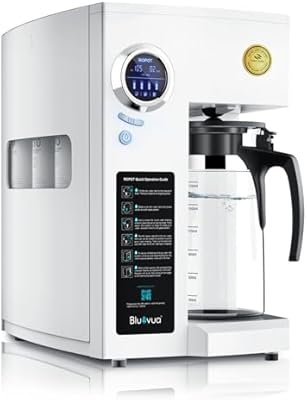
Bluevua RO100ROPOT Countertop RO
Five stage countertop RO, no plumbing, remineralized output
View →
APEC Reverse Osmosis System
NSF certified under sink RO, steel tank, whole family
View →Stop heating in plastic and replace plastic food storage
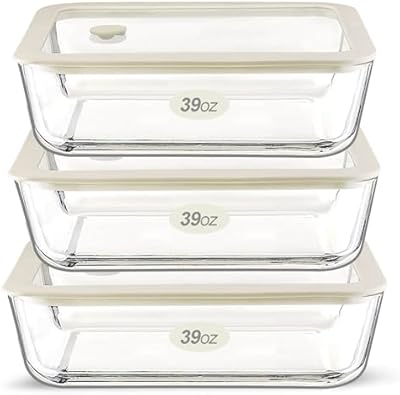
Heat accelerates particle and plasticizer migration by orders of magnitude over room temperature contact, and even cold plastic storage sheds through scratching, acidity, and dishwasher cycles. Transfer food to glass before heating, never pour boiling liquid into plastic, and as your plastic containers wear out replace them with glass or stainless. Prioritize anything that holds hot, fatty, or acidic food.
Read our food storage guide →

Replace pod and plastic coffee machines with a glass or stainless system
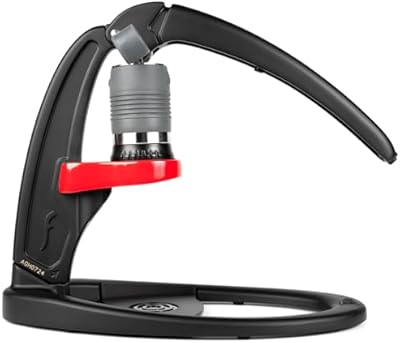
A pod or plastic reservoir machine forces near boiling water through plastic every morning, often into a plastic lined cup. A glass French press, a pour over with a glass or steel cone, or a manual lever espresso maker removes a major recurring source.
Read our plastic free coffee guide →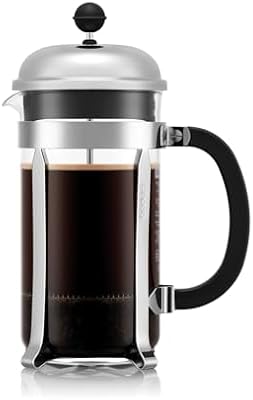

Eliminate plastic tea bags and plastic lined cups
Plastic mesh steeped in boiling water is one of the highest single serving release events in the food literature. The headline particle counts come from nanoplastic methods that some researchers argue may overcount, but the direction is clear. Loose leaf with a stainless or glass infuser fixes it.
Read our plastic free tea guide →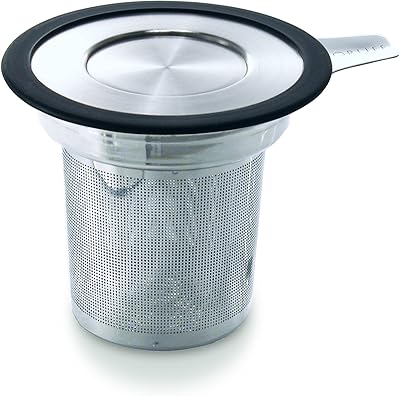
Forlife Stainless Steel Tea Infuser
Fine mesh basket, fits most mugs, all stainless steel
View →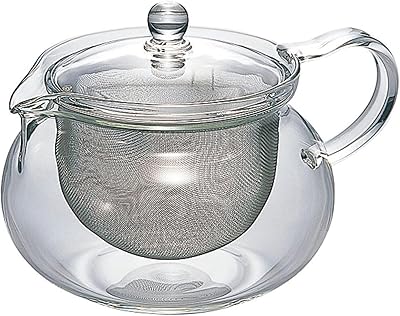
Hario Chacha Kyusu Glass Teapot
Borosilicate glass with built in stainless mesh filter
View →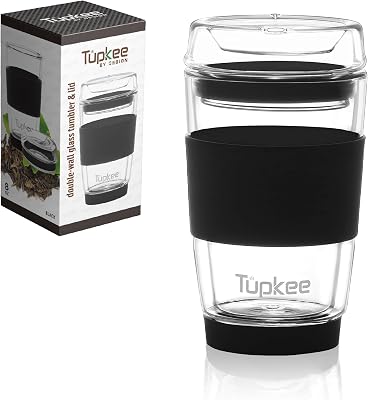
Tupkee Double Wall Glass Tumbler
Glass body and glass lid with a silicone seal, so nothing plastic touches a hot drink
View →Switch to a glass or stainless kettle
Plastic kettles bring water to a boil against plastic walls, every morning. Direct, recurring, and easy to fix. The cheapest option is under $40 and lasts years.
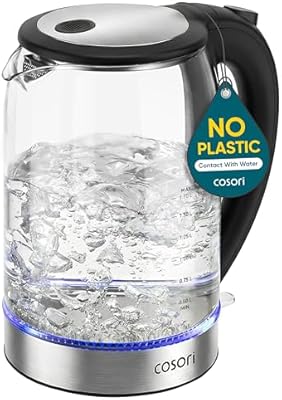
Cosori Glass Electric Kettle
Borosilicate glass body, stainless inner lid and spout, 1500W boil
View →
Cosori Double Wall Stainless Kettle
Full 304 stainless, no plastic inner lid, filter, or spout
View →
Fellow Stagg EKG Pour Over Kettle
Stainless interior, precision temp, gooseneck spout
View →Stop drinking bottled water
Technically a sub case of step 1, but it earns its own line. Bottled water tests dramatically higher per liter than tap, in the hundreds of thousands of particles per liter in recent work. If you cannot filter, at least drop the bottled habit and carry a stainless or glass bottle.
Read our bottled water guide →


Audit hot contact kitchen appliances
Rice cookers with plastic inserts, electric kettle components, plastic steamer baskets, slow cooker liners, non stick air fryer baskets. Anything where plastic meets heat or steam in normal use. Swap as each appliance comes up for replacement.
Read our kitchen appliances ranked →
Stainless Steel Slow Cooker Insert (6 Qt)
Fits standard Crock Pot base, eliminates ceramic glaze risk
View →
Fritaire Pro 9 in 1 Glass Air Fryer
Tempered glass bowl, 304 stainless accessories, no PFAS
View →
Magnifique Glass Air Fryer Combo
Borosilicate glass pot and lid, stainless crisper disk, 12 in 1
View →Ditch scratched non stick and black plastic utensils
Scratched non stick pans shed PFAS coating directly into food during cooking, worsened by abrasion and heat. Black plastic utensils carry an added flame retardant concern from recycled electronics plastic. Cast iron, stainless, or wood handle both.
Read our cookware comparison →


Replace plastic cutting boards
Knife scoring drives friction based shedding, estimated in a 2023 study (Yadav et al., Environmental Science & Technology) at tens of millions of particles per year into food. The mechanism is clear and the swap is cheap.
Read our cutting board guide →
Totally Bamboo Cutting Board (18x12.5)
Moso bamboo, formaldehyde free adhesive, large surface
View →
Teakhaus Edge Grain Teak Board
Sustainable teak, built in juice groove, water resistant
View →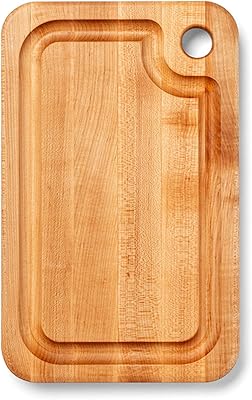
John Boos Maple End Grain Block (20x15)
End grain hard maple, self healing surface, NSF certified
View →Switch synthetic bedding to natural fiber
After food and water, inhalation is the next biggest exposure route, and bedding is the largest single textile source in the home. Your face is pressed into a pillowcase for 8 hours a night. If it is polyester, you are breathing synthetic microfibers the entire time. Start with the pillowcase, then sheets, then mattress when it wears out.
Read the Bedroom & Air guide →


Want the full research behind every swap?
The checklist gives you the order. The full Getting Started guide explains the science, the dose data, and the four tier framework behind why these ten swaps matter most.
Read the full guide Get your free 90 day plan →Continue your detox
Go deeper on any room or topic in this checklist.
Help us test what is really in everyday products.
We run independent lab tests and publish the results free. Support the testing, or get a personalized plan for your home. Both keep the science going.