Microplastics in Salt, Sugar, and Pantry Staples: What the Studies Show (2026)
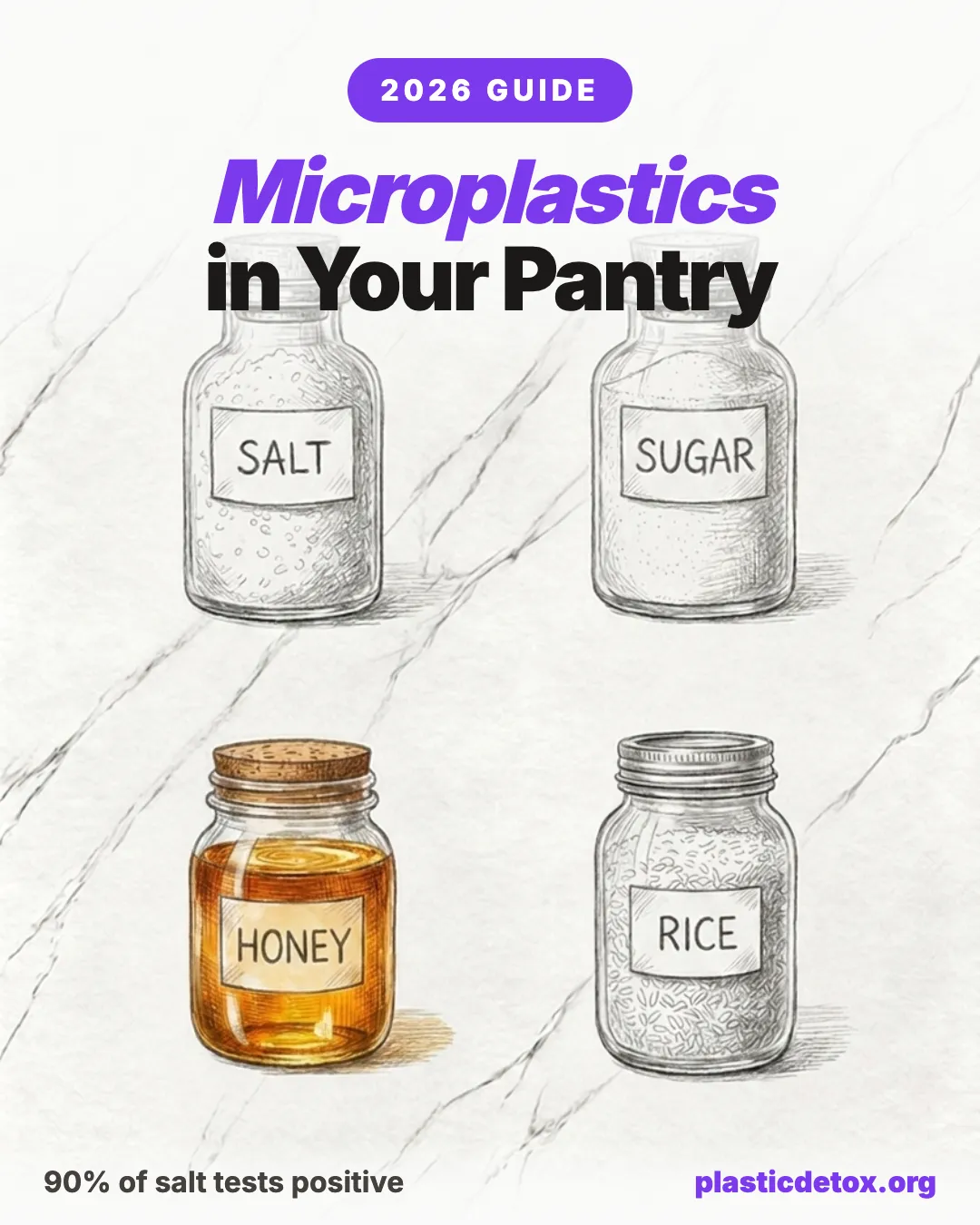
The shelf staples you reach for every day are quietly some of the most plastic contaminated food in your kitchen. When researchers tested 39 salt brands from 21 countries, they found microplastics in roughly 90 percent of them. Sugar, rice, flour, and honey carry their own loads. This guide breaks down what the studies actually measured, why the trendy wellness salts can be the worst choice, and the cleaner swaps that hold up when independent labs test them.
The 30 Second Summary
- About 90 percent of table salt contains microplastics. Sea salt is the worst because evaporating ocean water concentrates the plastic already in the sea.
- Mined salt has far fewer particles, but watch the heavy metals. Independent labs flagged some pink and "natural" sea salts for lead and arsenic, so lower plastic does not automatically mean cleaner.
- The cleanest tested pick is plain kosher salt from underground brine. Diamond Crystal Kosher Salt has returned non detect results for heavy metals across multiple independent rounds.
- Rinse your rice and skip the instant kind. Washing cuts plastic by 20 to 40 percent, and instant rice carries up to 4 times more than regular rice.
- Buy organic cane sugar. Conventional white and brown sugar both tested positive for PET and polypropylene particles.
- Stop re contaminating at home. Move staples out of plastic bags into airtight glass jars and cook with filtered water.
- Salt: Diamond Crystal Kosher
- Finishing salt: Maldon Sea Salt
- Sugar: Wholesome Organic Cane
- Rice: any regular rice, rinsed well (none tested so far is free of arsenic)
- Flour: One Degree Sprouted Whole Wheat
- Storage: Miuyhji Glass Mason Jars
- Cooking water: Blu Water Filter
1. How Much Plastic Is in Your Pantry?
Microplastics in food are no longer a fringe finding. They have been measured in nearly every dry staple researchers have looked at, and the highly processed versions tend to carry the most plastic per gram. Here is the snapshot from the published literature.
- Salt: A study published in Environmental Science & Technology tested 39 brands from 21 countries and detected microplastics in roughly 90 percent of them. Sea salt was the most contaminated category.
- Rice: University of Queensland researchers estimated 3 to 4 milligrams of plastic per 100 grams of rice, climbing to about 13 milligrams per serving for instant rice.
- Sugar: In one analysis, white sugar contained around 20 particles per kilogram and brown sugar around 67 particles per kilogram, dominated by PET and polypropylene.
- Flour: Commercial flour testing put human intake in the range of roughly 246 to 375 particles per year. Grains are also one of the foods most worth buying carefully to limit glyphosate residue, since organic alone does not guarantee a clean result.
- Honey: Microplastics have been documented in honey samples from locations around the world.
None of these are catastrophic on their own. The concern is that you eat them every single day, often together in the same meal, and the totals add up across a lifetime. The good news is that staples are also one of the easiest places to cut exposure, because the swaps are cheap and you only have to make the decision once at the store. Here are the picks we land on for each one, with the reasoning for salt covered in detail further down.
Our Pantry Staple Picks

Diamond Crystal Kosher Salt
Underground brine, not seawater, so low in microplastics. Non detect for lead, arsenic, cadmium, and mercury. Additive free.
View →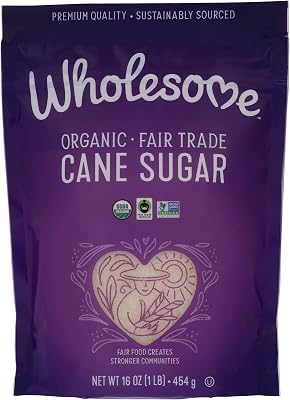
Wholesome Organic Cane Sugar
Organic, fair trade cane sugar that is minimally processed. Decant to glass at home to keep it off plastic.
View →
One Degree Sprouted Whole Wheat Flour
Stone milled sprouted whole wheat, one ingredient, with a code on the bag that traces the grain to the farm that grew it.
View →
Palouse Brand Flour
Whole wheat and bread flour. Certified Glyphosate Residue Free, USA grown and field traced from a single farm.
View →
Heavenly Organics Raw Honey
Raw, unfiltered organic honey from wild Himalayan hives, the first food certified Glyphosate Residue Free by The Detox Project. Jar material not stated; the brand also sells honey in PET bottles, so pick a jar.
View →2. Salt Is the Worst Offender
Salt deserves its own section because it is uniquely exposed. Sea salt is made by evaporating ocean water, and the ocean is where a huge share of the world's plastic ends up. When the water evaporates, the plastic stays behind and gets concentrated into the crystals you sprinkle on dinner. That is why sea salt consistently tops the contamination charts.
The source of the salt matters enormously. A study of 15 brands in China measured microplastic concentrations of 550 to 681 particles per kilogram in sea salts, 43 to 364 particles per kilogram in lake salts, and just 7 to 204 particles per kilogram in rock and well salts. In other words, salt pulled from ancient underground deposits can carry a fraction of the plastic found in modern sea salt.
One caveat worth knowing: results vary by region. A study of table salts from Turkey actually found higher microplastic levels in some rock salts than in sea salts, and lake and rock salts can contain a higher share of very small particles. Source and processing matter more than the label category, which is exactly why independent testing is the only way to know what you are buying.
3. The Catch: Mined Salt Can Trade Plastic for Heavy Metals
If lower microplastics were the only goal, the answer would be simple: buy mined salt. But this is where careful shoppers get caught. Several of the most popular "clean" salts have been independently tested and flagged for heavy metals, particularly lead and arsenic. Trading a plastic problem for a lead problem is not a win.
Here is what independent, third party labs have actually reported. We list these not to scare you off salt, which you need, but so you can see why blanket advice to "just buy pink salt" or "just buy Celtic" does not hold up.
| Salt | Heavy Metal Findings | Status |
|---|---|---|
| Celtic Sea Salt (grey) | Independent testing reported lead around 553 ppb and arsenic around 82 ppb, among the highest in the dataset | Active class action filed Feb 2025 |
| Redmond Real Salt | A 2024 independent lab report found lead around 290 ppb and arsenic around 91 ppb | Below EU limit, flagged by testers |
| Himalayan Pink Salt (varies by brand) | Arsenic detected in most samples, lead in the majority, ranging widely between brands | Brand dependent |
| Baja Gold Mineral Sea Salt | Lead Safe Mama's September 2024 lab test found lead at 114 ppb and arsenic at 11 ppb, cadmium and mercury non detect | Lead and arsenic above the proposed levels |
| Maldon Sea Salt | Lead Safe Mama's March 2025 lab test found lead, cadmium, mercury and arsenic all non detect | Non detect for all four metals |
| Diamond Crystal Kosher Salt | Non detect across multiple independent rounds for all heavy metals tested | Cleanest in the dataset |
The Celtic situation is the clearest cautionary tale. In February 2025, a proposed class action (Gonzalez v. Celtic Ocean International) alleged that two Celtic varieties contained elevated lead and arsenic, citing lab testing of roughly 460 ppb lead and 140 ppb arsenic. It is a useful reminder that a premium price and a wholesome story are not contamination data.
4. The Cleanest Salts to Buy
This is where the two problems force a choice. Salt from underground deposits and brine is the lowest in microplastics, because those deposits formed long before plastic existed. Sea salt, by definition, carries more microplastics no matter how premium the brand, since it is made from today's ocean water. So there is really one pick that wins on both counts, plus one honest option if you specifically want a sea salt for flavor or trace minerals.
Best for everyday cooking (wins on both)
If you want a sea salt for flavor or minerals
Sea salt carries more microplastics than mined salt, full stop. If you still want one for finishing or trace minerals, at least pick a brand that tests low for heavy metals, and use it alongside a mined salt for daily cooking rather than as your only salt. Maldon is the cleanest we found on the metals data.

This matters beyond the salt cellar. Nearly every premium electrolyte powder builds its formula on exactly these salts and sells that as a purity feature, which means a daily hydration stick can be a quiet second serving of the salt you just decided not to cook with. We worked through which brands do that, and what independent PFAS and lead testing found across the category, in our guide to non toxic electrolytes.
5. Sugar: Granulated and Powdered
Sugar is a quieter source, but it shows up in testing too. In one analysis, every sample contained microplastics: white sugar at around 20 particles per kilogram, of which roughly two thirds were PET, and brown sugar at around 67 particles per kilogram, mostly polypropylene. Estimates put yearly intake from sugar near 300 particles.
Some of that contamination comes from processing equipment and packaging rather than the cane itself, which is why less processed sugar in non plastic packaging is the better bet. A few practical moves:
- Choose organic cane sugar over heavily refined or repackaged sugar where you can. Wholesome Organic Cane Sugar is widely available and minimally processed.
- Decant into glass at home so the sugar is not sitting in plastic for months.
- Make your own powdered sugar by blitzing cane sugar in a clean grinder, which skips the extra processing step entirely.
6. Rice: Rinse It and Skip Instant
Rice is one of the few staples where a simple kitchen habit makes a measurable difference. University of Queensland researchers found people may consume 3 to 4 milligrams of plastic for every 100 grams of rice, and that instant or precooked rice carried roughly 4 times more, up to about 13 milligrams per serving. The extra processing and packaging are the likely culprits.
The fix is reassuringly low tech. Washing rice before cooking reduced plastic contamination by 20 to 40 percent in testing published in the Journal of Hazardous Materials. Rinsing also removes surface starch and some pesticide residue, so it is worth doing regardless.
- Buy regular rice, not instant. Independent testing has found arsenic in every rice tested so far, Lundberg included, so how you rinse and cook it matters more than the brand.
- Rinse until the water runs clear, swirling and draining two or three times in a fine mesh strainer.
- Cook in filtered water, since the rice absorbs whatever is in the pot.
7. Honey, Flour, and Other Staples
The same pattern repeats across the rest of the pantry. Microplastics have been found in honey worldwide, in commercial flour, in bottled drinks, and in just about every processed dry good that has been studied. You cannot eliminate them, but you can lean toward less processed forms in better packaging.
- Honey: Choose raw honey in glass jars over plastic squeeze bottles. Honey is one of the most adulterated foods and frequently carries glyphosate, so a brand that publishes testing matters. Heavenly Organics is certified Glyphosate Residue Free by The Detox Project, but it also sells honey in PET bottles and does not state its jar material, so choose the jars; local raw honey from a trusted beekeeper is also a good option.
- Flour: Buy paper bagged flour where possible and decant it into a sealed glass container at home. Whole grain and stone ground flours are less processed.
- Spices: Buying organic helps with pesticides, but it does not lower heavy metals, because organic rules do not test for them. Consumer Reports found concerning levels of lead, arsenic, or cadmium in about a third of the spices it tested, with organic no cleaner on average. Favor lower risk spices like black pepper, garlic powder, coriander, and saffron, choose brands that publish heavy metal testing, and store them in glass rather than plastic shakers.
- Oils and vinegars: Always choose glass bottles over plastic, since fats pull plasticizers out of packaging over time.
The single highest impact habit across all of these is not a brand choice at all. It is getting your staples out of plastic packaging once they are home, which we cover next.
8. Stop Re Contaminating: Storage Matters
Here is the part most articles miss. Even a clean staple keeps picking up plastic if it lives in a plastic bag or bin on your shelf for months. Friction, heat, and time all shed particles from the packaging into the food. Decanting into glass is one of the cheapest, most durable upgrades you can make in the kitchen.

Miuyhji Wide Mouth Mason Jars
Six 16 ounce wide mouth glass jars with airtight lids. Sized for spices, sugar, and small grains, and also rated for fermenting and pickling. Glass body gets staples out of their original plastic bags.
View →
ComSaf Glass Canisters, Set
Airtight glass canisters in graduated sizes from roughly 0.7 to 1.2 quart with sealing lids. Clear glass body for everyday flour, sugar, oats, and coffee within reach on the counter.
View →
ComSaf Large Square Glass Jars
Three 78 ounce square glass jars with airtight lids. High capacity for bulk rice, flour, and grains bought in paper or from refill bins, stored in glass instead of plastic bins.
View →You do not need a matching set to start. Wide mouth mason jars, recycled glass jars from sauces, or any sealable glass container will do the job. The goal is simply to get dry staples out of their original plastic packaging and keep them out of contact with plastic on the shelf. For a deeper comparison of materials, see our guide to the best plastic free food storage containers.
9. Cook With Filtered Water
Salt and sugar are dry, but most of what you cook with them is not. Rice, pasta, oats, soups, and sauces all absorb the water you add, and tap and bottled water both carry microplastics. Filtering the water you cook with closes a gap that better salt alone cannot.
A quality filter removes microplastics along with chlorine and heavy metals, which also improves taste. If you want a simple starting point, the Blu water filter is our entry pick for everyday use. For the full breakdown of which filter types actually capture microplastics, read how to remove microplastics from drinking water and our deeper dive on filtering PFAS and microplastics.
10. Your Lower Plastic Pantry
Here is the whole strategy on one page. None of it requires a special diet or a big budget. It is a handful of one time swaps and two new habits.
| Staple | The Move | Recommended Pick |
|---|---|---|
| Salt | Tested clean for plastic and metals | Diamond Crystal Kosher |
| Finishing salt | Low metal sea salt for the crunch | Maldon Flakes |
| Sugar | Organic cane, decanted to glass | Wholesome Organic Cane |
| Rice | Regular not instant, rinse before cooking | Any regular rice, rinsed |
| Storage | Out of plastic bags, into glass | Miuyhji Mason Jars |
| Water | Filter what you cook with | Blu Water Filter |
11. Frequently Asked Questions
Does salt contain microplastics?
Yes. A landmark study of 39 salt brands from 21 countries found microplastics in about 90 percent of them. Sea salt is the most contaminated because it is made by evaporating ocean water, which concentrates the plastic already in the sea. Rock salt and well salt sourced from underground deposits contain far fewer particles, though they can carry their own heavy metal concerns.
Which salt has the least microplastics?
Salt mined from ancient underground deposits, including rock salt and many kosher salts made from evaporated brine, contains the lowest microplastic levels. One study found rock and well salts at 7 to 204 particles per kilogram, compared with 550 to 681 particles per kilogram in sea salts. The trade off is that some mined and pink salts have tested high for lead and arsenic, so the cleanest choice is a salt that has been independently tested low for both.
Is sea salt or table salt healthier?
From a microplastics standpoint, sea salt is the worst choice because evaporated seawater concentrates ocean plastic. Plain refined table salt and kosher salt made from underground brine generally test lower for both microplastics and heavy metals. The wellness halo around sea salt and pink salt is not supported by the contamination data.
Does washing rice remove microplastics?
Partly. Research published in the Journal of Hazardous Materials found that rinsing rice before cooking reduces plastic contamination by 20 to 40 percent. Instant and precooked rice carries the most plastic, up to roughly 13 milligrams per serving, so choosing regular rice and rinsing it well is the simplest reduction.
How do I reduce microplastics in my pantry?
Choose mined or kosher salt that has been independently tested low for heavy metals, buy organic cane sugar, rinse your rice and skip instant varieties, cook with filtered water, and move staples out of their plastic packaging into glass jars so they do not keep picking up particles on your shelf. For dry goods the original jar lid is fine if you store the jar upright, though the gasket inside it is PVC plastisol and is worth swapping for stainless on anything oily or kept for months.
Related Articles
- Best Non Toxic Electrolytes
The same sea salt problem, in a stick pack. Independent testing found PFAS markers in 23 percent of electrolyte powders. - Plastic in Groceries: What Really Matters
Where your grocery dollars cut the most plastic exposure, aisle by aisle. - How to Remove Microplastics from Drinking Water
Which water filters actually capture microplastics, and which fall short. - Best Plastic Free Food Storage Containers
Glass, stainless steel, and silicone compared for keeping staples clean. - Pesticides in Food 101
Rice, grains, and produce: where buying organic actually pays off. - Can You Detox Microplastics?
What the science says about clearing plastic particles from your body.