Best Non Toxic Nail Polish (2026): What 10 Free Leaves Out, and the Polishes That Pass
The 30 Second Summary
- Some of the polish gets into you. In a Duke University study, a marker for the plasticizer triphenyl phosphate (TPHP) rose almost sevenfold in urine within 14 hours of painting, and it came in through the skin.
- The famous toxic trio is mostly gone. Its replacement is not. TPHP took over from the phthalate DBP, and Europe's safety committee could not call it safe in nail polish.
- A free count is not a test. Labs have found toluene, formaldehyde and unlisted TPHP in polishes sold as free of them. Read the full list instead.
- Gel carries the bigger allergy risk. Uncured acrylate on skin can cause a lifelong allergy, and Europe banned gel's usual curing agent in 2025.
- Buy a polish whose full list names none of the six words in our label check. Sally Hansen Insta-Dri, Sally Hansen Good.Kind.Pure., ORLY Breathable and Côte all qualify.
- Best overall: Sally Hansen Insta-Dri, full list published, 4.4 stars on over 14,000 ratings.
- Plant based: Sally Hansen Good.Kind.Pure., the shortest list we read.
- Color and treatment: ORLY Breathable.
- For kids: Suncoat Peelable Nail Polish, water based, peels off without remover.
Nail polish is a plastic you paint on. Once the solvent evaporates, what stays on the nail is a film of polymer and plasticizer, the same two things that make a vinyl shower curtain flexible. For most of the last twenty years the worry was the toxic trio of toluene, formaldehyde and the phthalate DBP. Most brands dropped them, put a number on the bottle, and the conversation stopped there.
It should not have. The plasticizer that replaced DBP gets into the body within hours, and the free counts on the front of the bottle have failed lab tests again and again. We read the full ingredient list of 51 polishes, top coats and gels from 18 brands. This is what we found, the six words to look for, and the polishes that pass.
The plasticizer that replaced DBP
Polish needs a plasticizer, or the film cracks the first time the nail bends. When DBP was pushed out of the category in the 2000s, many makers switched to triphenyl phosphate, or TPHP, a chemical also used as a flame retardant in furniture foam. In 2015 Duke University and the Environmental Working Group tested ten polishes and found TPHP in eight, at up to 1.7 percent, including two whose labels never mentioned it.
Then they painted the nails of 26 women and collected their urine. The TPHP marker rose from 0.96 to 13.02 nanograms per milliliter within 10 to 14 hours, about 6.6 times higher. When the same polish went on fake nails worn over gloves, the marker barely moved. The dose was coming through the skin around the nail, not from the fumes.
Geometric mean of the TPHP breakdown product DPHP in 26 women. Mendelsohn and others, Environment International, 2016.
TPHP interferes with hormone signaling in animal studies, and in July 2024 the European Commission's Scientific Committee on Consumer Safety said it could not conclude that TPHP is safe in nail products, because damage to DNA could not be ruled out. California's toxics department, which counted TPHP in 1,154 of the 13,108 nail products reported to it in 2020, found strong evidence of liver toxicity. TPHP is now on our hazard list, so any polish that names it fails our formula check.
Why 10 free means less than it says
There is no standard behind a free count. Each brand writes its own list, and the higher numbers are padded with things nobody puts in nail polish. One brand's 10 spends a place on gluten. A 2018 Harvard study of 40 polishes found six different definitions of 10 free, and only four of them excluded TPHP. Worse, the claims do not always hold for the things they do name.
The free count is a claim. The full ingredient list is a legal declaration, and even that has been caught short.
The good news in the same work is that toluene and DBP have nearly left retail polish. California's 2023 study found toluene in none of the polishes it tested, only in other nail products such as hardeners, and the Harvard team found DBP in trace amounts at most. The problem moved. It is now TPHP, a handful of UV filters added to stop colors fading, and plastic glitter.
Skip the number on the front and turn the bottle over. If a brand will not print its full list, that is the answer. You can look up any polish already in your drawer in Product Check.
The six words to look for
Our formula check reads every ingredient against a hazard list. For nail polish, six entries do nearly all the work. A polish that names any of them fails, whatever the front of the bottle says.
Gel polish adds two more: trimethylbenzoyl diphenylphosphine oxide (TPO), banned in European cosmetics since 2025, and HEMA, a common cause of acrylate allergy.
Gel polish and UV lamps
Gel is a different chemistry. It goes on as a liquid of acrylate monomers and hardens under a UV or LED lamp. The cured film is inert enough, but uncured gel that touches the skin can sensitize it for life, and an acrylate allergy can later turn up as a reaction to dental fillings or medical glue. In a 2017 audit of 4,931 patients patch tested in the UK and Ireland, 2.4 percent reacted to an acrylate, and 60 percent of those cases came from nail products.
Europe has acted twice. Since 2021, gels containing HEMA may only be sold for professional use, with an allergy warning. From 1 September 2025 the curing agent TPO, classified as toxic to reproduction, is banned in European cosmetics outright. The US has neither rule, and home gel kits sold here still list both. If you love a gel manicure, have it done by a professional who keeps the gel off your skin, and check the label for TPO.
The lamps are a smaller, less certain question. A 2023 University of California San Diego study found that 20 minutes under a nail dryer killed 20 to 30 percent of skin cells in a dish and left mutations in the survivors. The authors were clear that cells in a dish lack the skin's protective layer and that this is not evidence of cancer in people. Fingerless gloves, or a mineral sunscreen on the backs of the hands, remove most of the exposure.
Kids, water based polish and removers
Water based polish replaces the solvents with water and an acrylic film, which makes it the gentlest option for children who chew their nails. It is not automatically clean. California's 2023 study found a solvent listed in California as toxic to development, at about 4 percent, in a water based kids polish sold as non toxic and safe for pregnancy, and it was not on the label. Our kids pick has a two ingredient base, water and an acrylate copolymer, and peels off, so no remover goes near a child's hands.
Removers deserve their own warning. Acetone is harsh on nails but well understood. The real hazard is the cheap gel remover sold online as a magic or burst formula: in 2024 and 2025 the FDA found methylene chloride, banned in cosmetics, at 77 to 94 percent in ten of them, and one brand was recalled in April 2026. Use plain acetone in a ventilated room, or soak off gel at a salon.
How we vet nail polish
- The full ingredient list, word for word. Read from the maker's own page or the bottle, never from the free claim. A brand that prints no list cannot pass, because we cannot check it.
- What it is stored in. Every polish here comes in glass, which gives nothing to the solvent. The cap and brush are plastic on all of them, and are noted rather than scored.
- Independent tests. University and state lab results on the brand. An old bad result stands until a newer test replaces it, even when the label has since changed.
- Lawsuits and recalls. California Proposition 65 notices, class actions and the FDA, CPSC and Health Canada registers, confirmed against the company named on the record.
The picks
Every pick has a full published ingredient list that names nothing on our hazard list, comes in glass, has no recall or lawsuit against it, and has a long record of owner reviews. None has an independent lab test of its current formula, because no lab has published one for any polish sold today.

Sally Hansen Insta-Dri Nail Polish
Solvent lacquer in a glass bottle: nitrocellulose and polyester resin film, acetyl tributyl citrate plasticizer. No TPHP, camphor, formaldehyde resin or UV filter on the label. Sold as quick drying.
View →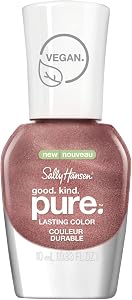
Sally Hansen Good.Kind.Pure. Nail Polish
Solvent lacquer in a glass bottle, plasticized with isosorbide, a plant derived ester, in place of a phthalate or TPHP. No UV filter, no fragrance. Vegan, and the list matches its free claim.
View →
ORLY Breathable Treatment + Color
Solvent lacquer in a glass bottle with argan oil and panthenol in the base. No TPHP, camphor or formaldehyde resin on the label. Vegan, Leaping Bunny certified, made in the USA.
View →
Côte Nail Polish
Solvent lacquer in a glass bottle, nitrocellulose and polyester resin film, citrate plasticizer. Every shade page prints its own full list, none naming TPHP or formaldehyde resin. Vegan, made in the USA.
View →
Suncoat Peelable Nail Polish
Water based peel off polish in glass bottles: water and an acrylate copolymer film with mineral pigments. No solvent, no fragrance, and it peels off without remover.
View →Sally Hansen Insta-Dri is the top pick because it combines a clean full list with over 14,000 owner ratings at 4.4 stars, which no other passing polish comes close to. Good.Kind.Pure. has the shortest list of anything we read and no UV filter at all, which makes it the choice if you want the fewest ingredients. ORLY Breathable carries benzophenone 1, a UV stabilizer that is not on our hazard list. Côte has fewer reviews, 4.4 stars on 117, and every shade page prints its own list, which almost no other brand does.
Every pick here is also in our store, in the bathroom section.
Every polish we checked
All 51 polishes, coats and gels we researched, with the finding that decided each one. Good means the full list passes and nothing else counts against it. Where a brand sells two formulas, each has its own row.
| Polish | What decided it | Verdict |
|---|---|---|
| Sally Hansen Insta-Dri | Full list passes, glass | |
| Sally Hansen Good.Kind.Pure. | Full list passes, glass | |
| ORLY Breathable | Full list passes, glass | |
| Côte Nail Polish | Full list passes on every shade read, glass | |
| Suncoat Peelable Nail Polish | Water and acrylate copolymer, glass | |
| butter LONDON Patent Shine 10X and Pure Colour 21X | Full lists pass; 4.0 stars on a few hundred ratings | |
| Côte Quick Dry Top Coat and Strengthener Base Coat | Full lists pass | |
| Dazzle Dry Base Coat | Full list passes | |
| LIPPMANN Nail Lacquer and Gloss Top Coat | Full lists pass | |
| Mineral Fusion Nail Polish, Base Coat and Top Coat | Full lists pass | |
| OPI Infinite Shine and Nature Strong | Full lists pass | |
| Pacifica Plant Magic | Full list passes; the line may be discontinued | |
| Suncoat Water Based Polish and Clear Coat | Full lists pass; sold direct | |
| tenoverten, 2026 creme shades | Full list passes; sold direct | |
| OPI Nail Lacquer | TPHP measured in a 2019 bottle, untested since | |
| OPI GelColor and GELement | Formaldehyde measured in two GelColor shades; gel bottle material not named | |
| Sally Hansen Miracle Gel | TPHP measured in a 2019 bottle, untested since | |
| SOPHi and Piggy Paint polishes | An unlisted solvent measured in a kids shade | |
| Zoya Nail Polish, Anchor and Armor coats | No list published per shade | |
| Karma Organic Natural Nail Polish and Base & Top Coat | No list published | |
| ORLY Nail Lacquer, classic | Lists TPHP | |
| Sally Hansen Xtreme Wear | Lists benzophenone 3 and TPHP | |
| Sally Hansen Salon Gel Polish | Lists TPO and HEMA | |
| essie original | Lists talc | |
| essie gel couture | Lists octocrylene and polyethylene | |
| Olive & June Long Lasting and Quick Dry | List octocrylene | |
| Dazzle Dry Nail Lacquer and Top Coat | List octocrylene and cyclic siloxanes | |
| ella+mila Nail Polish | Shared list names PET glitter | |
| tenoverten, classic shades | Shared list names PET glitter | |
| Karma Organic Halal Breathable | List names PET glitter | |
| Piggy Paint and SOPHi top coats | List polyethylene | |
| Suncoat Kids Glitter | Lists PET glitter | |
| Revlon Nail Enamel | No ingredient list published anywhere we could find |
The ones we did not pick
OPI Nail Lacquer and Sally Hansen Miracle Gel
California's 2023 lab study measured TPHP at about 2.9 percent in an OPI Nail Lacquer and 0.9 percent in a Miracle Gel, both bought in 2019, when TPHP was on their labels. Both labels have dropped it since, which is welcome, but no independent lab has tested either line again. A bad result stands until a newer one replaces it. OPI's GelColor salon gels also held formaldehyde in two shades that did not list it.
SOPHi and Piggy Paint
The labels print a clean three ingredient base of water, acrylates copolymer and neem oil. California's 2023 study measured N methyl pyrrolidone, a solvent listed in California as toxic to development, at about 3.9 percent in a Piggy Paint shade sold as non toxic and safe for pregnancy. It is not on the label. The brand's own top coats, which it sells as part of the system, list polyethylene.
Zoya
Zoya prints no ingredient list on its product pages or listings. The only list we could find sits in its site's product data, and it is the same for every shade and both coats, clear ones included. That catch all list names benzophenone 3, the label name for oxybenzone, and PET and PBT glitter. Without a list per bottle there is no way to know which apply to yours.
ORLY classic lacquer and Sally Hansen Xtreme Wear
Both still list TPHP today. Xtreme Wear also lists benzophenone 3. These are the same brands as two of our picks, which is the point: a brand is not a verdict, and the line matters. ORLY's Breathable formula drops TPHP; its classic lacquer does not.
essie
essie prints one list per range. The original polish names talc in the main list rather than as an optional pigment, and talc is classed as probably carcinogenic since 2024. Gel couture names octocrylene, a UV filter that breaks down into benzophenone, and polyethylene. California's 2012 study also found TPHP near 1.8 percent in an essie shade, and no newer test has replaced it.
Olive & June and Dazzle Dry
Both lacquers list octocrylene in the base of every shade we read. Olive & June's Long Lasting formula also lists a methacrylate made from bisphenol A beside a BPA free claim. Dazzle Dry's lacquer and top coat add the cyclic siloxanes D5 and D6 and a fragrance that includes lilial, banned in European cosmetics since 2022. Dazzle Dry's base coat passes on its own.
ella+mila, tenoverten classic shades and Karma Organic
Each prints one list across its range, and that list names PET and PBT glitter, which is plastic. A plain creme may not contain it, but the brand gives you no way to tell. Karma Organic says no plastic is used in its products and that its polish is infused with vitamins; the one list it publishes starts with synthetic solvents, names no vitamins, and includes PET glitter. tenoverten's four 2026 creme shades print their own lists and pass.
Sally Hansen Salon Gel Polish
This home UV gel kit still lists TPO, the curing agent banned in European cosmetics since September 2025, and HEMA, which Europe restricts to professional use because of the allergy risk. If you want gel at home, look for a TPO free and HEMA free formula and keep it off your skin.
How to choose a polish
- Turn the bottle over. A full ingredient list, on the bottle or the brand's own page, is the minimum. No list is a reason to walk away.
- Look for the six words. Triphenyl phosphate, toluene, formaldehyde, a phthalate, benzophenone 3 or octocrylene, and polyethylene terephthalate. Any one fails the polish.
- Plain over glitter. Glitter in polish is nearly always plastic, and it is the one ingredient here Europe already classes as a microplastic.
- Paint in a ventilated room, and keep it off the skin. The Duke result came from skin contact around the nail, so a careful edge matters as much as the bottle.
- For children, water based and peel off. No solvent, and no remover on small hands.
- Plain acetone to remove. Never a magic gel remover bought online.
Frequently asked questions
Is nail polish absorbed into the body?
Some of it is. In a 2016 Duke University study, a urine marker for the plasticizer triphenyl phosphate rose from 0.96 to 13.02 nanograms per milliliter within 10 to 14 hours of painting, almost seven times higher. When the same polish went on fake nails worn over gloves, there was no meaningful rise, so the dose came through the skin around the nail rather than from the air.
What does 10 free nail polish mean?
Nothing fixed. Each brand writes its own list, and a 2018 Harvard study found six different definitions of 10 free, only four of which excluded triphenyl phosphate. Some brands count ingredients that were never used in nail polish. The full ingredient list is the only thing that tells you what is in the bottle.
Is gel nail polish worse than regular polish?
For allergy, yes. Gel is cured from acrylate monomers such as HEMA, and uncured gel on the skin can cause a lifelong allergy. In a UK and Irish audit of 4,931 patch tested patients, 2.4 percent reacted to an acrylate and 60 percent of those cases came from nail products. Europe limits HEMA to professional use and banned the curing agent TPO in cosmetics from 1 September 2025.
Are UV nail lamps safe?
Unknown, rather than proven harmful. A 2023 University of California San Diego study found that 20 minutes under a nail dryer killed 20 to 30 percent of skin cells in a dish and left mutations in the survivors. The authors were clear that this is not direct evidence of cancer in people. Fingerless gloves or a broad spectrum sunscreen on the hands cut the exposure.
Is water based nail polish safe for kids?
Usually the gentlest option, but water based does not guarantee clean. A water based peel off polish with a two ingredient base is our pick for children. California's 2023 lab study also found a solvent listed as toxic to development, at about 4 percent, in a water based kids polish sold as non toxic that did not list it.
Which nail polish brands are non toxic?
Judged on the full ingredient list, these pass: Sally Hansen Insta-Dri, Sally Hansen Good.Kind.Pure., ORLY Breathable, Côte and, for children, Suncoat's water based peel off polish. None of them lists triphenyl phosphate, toluene, formaldehyde resin, a phthalate, a chemical UV filter or plastic glitter.