Best Non Toxic Diapers: What Tested Clean and What to Watch (2026)
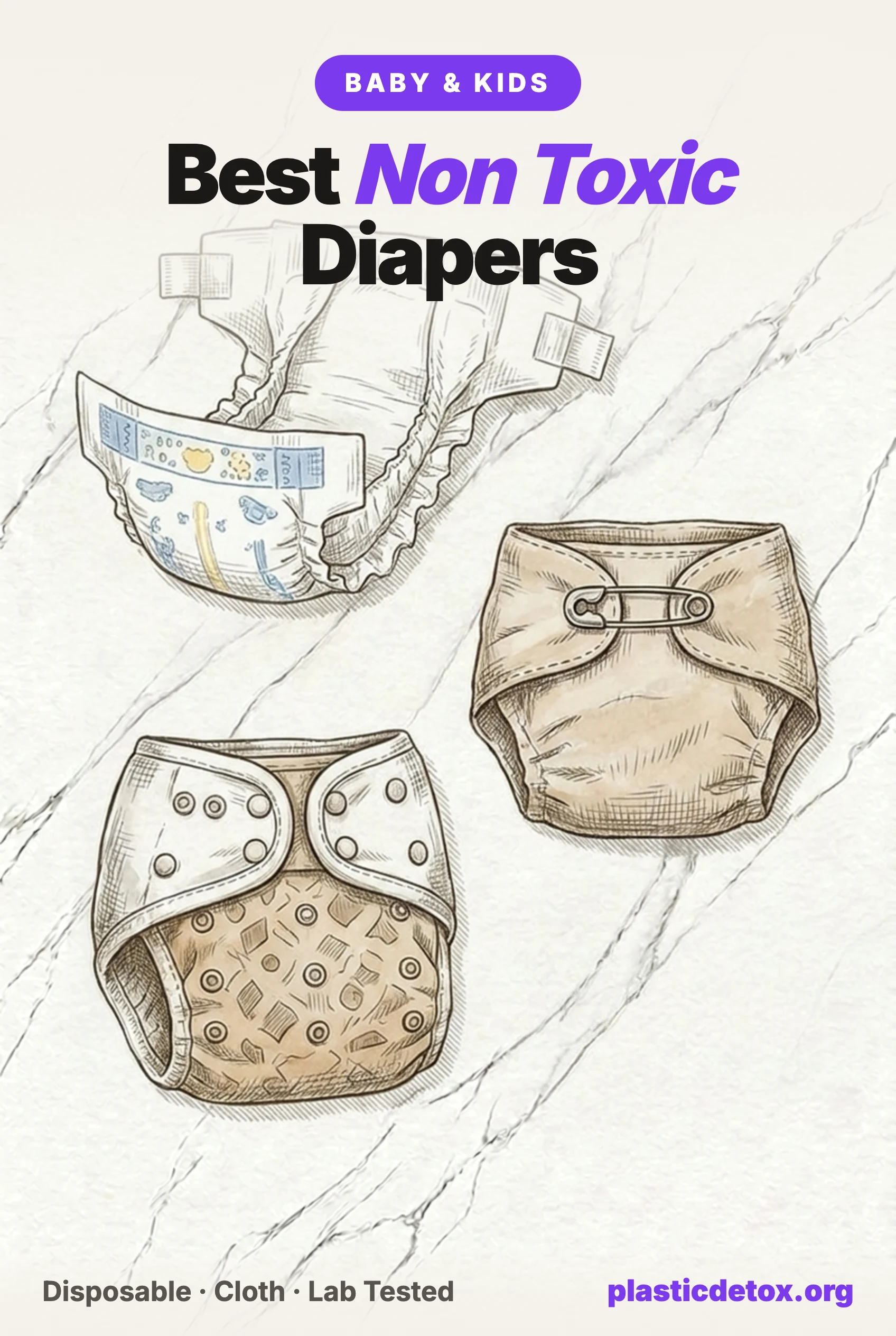
The 30 Second Summary
- A baby wears 6,000 to 10,000 diapers before potty training, held against the thinnest, most permeable skin on the body, in a warm and wet environment, around the clock for two to three years. Almost nothing else in a child's life has that exposure profile.
- Independent 2023 testing found PFAS markers in 23 percent of diapers. An EPA certified lab commissioned by Mamavation screened 65 diapers from 40 brands and found organic fluorine in 17 percent of disposables and 30 percent of cloth diapers and accessories, at 10 to 323 ppm. Several detections were on brands sold as eco or natural.
- Best overall: Coterie. EWG Verified in every size, totally chlorine free pulp, a full public material list, the best absorbency of anything here, and no subscription required. HealthyBaby matches it on every safety measure and is the one to pick if you want organic cotton in the outer cover.
- Cheapest clean diaper: Eco by Naty, totally chlorine free and tested non detect. Seventh Generation is the easiest to find, stocked in ordinary grocery stores.
- Going reusable? More cloth diapers came back positive for PFAS markers than disposables did, 30 percent against 17 percent, and the hits were on the waterproof cover, not the absorbent layer. Build the system yourself: natural fiber prefolds and inserts, which tested clean almost across the board, under a cover from a brand that tested non detect.
- Watch the chlorine wording. Totally chlorine free means oxygen bleached. Elemental chlorine free means chlorine dioxide. Both get marketed as "chlorine free" and only one is actually chlorine free.
- Several clean looking brands need caution. Seven of them carry something a parent reading the packaging would never see: labeling class actions, rash complaint clusters, or fluorine detections on brands whose entire position is eco.
Diapers are the single highest contact plastic product in a baby's life. A child wears roughly 6,000 to 10,000 of them before potty training, each one pressed against the thinnest and most permeable skin on the body, in a sealed, warm, wet environment, for hours at a stretch, day and night, for two to three years. Those are precisely the conditions that accelerate chemical migration out of a material and into skin.
So it matters that the clean diaper aisle has become one of the most heavily marketed corners of the baby industry, and one of the least verifiable. Words like pure, natural, plant based, and chlorine free carry no legal definition. In the last few years, independent lab screening has found PFAS markers in diapers sold as eco friendly, a French regulator has documented dozens of contaminants across the category, and one of the fastest growing "clean" brands in the United States has picked up both a labeling class action and a cluster of chemical burn complaints.
This guide covers what the testing actually shows, which diapers we would buy, and, because it is the question we get asked most, which clean looking brands we would not put on a newborn right now. The rest of the changing table has its own guides: non toxic baby wipes and diaper rash creams and baby balms. If you are building a whole nursery rather than just solving diapers, start with our non toxic baby registry and our review of the top 100 baby and kids products on Amazon, where every diaper brand below is rated alongside 99 other products parents actually buy.
1. Why Diapers Are a High Exposure Product
Exposure is not just about what a material contains. It is about dose, duration, and route. Diapers score badly on all three.
2. What Is Actually Inside a Disposable Diaper
Almost every disposable diaper on the market, clean brands included, is built from the same five layers. Knowing them makes marketing claims much easier to read.
| Layer | Usually made of | What to look for |
|---|---|---|
| Topsheet (touches skin) | Polypropylene nonwoven, sometimes part plant derived polyethylene | The layer that matters most. No lotion, no fragrance, no aloe or added softeners |
| Acquisition layer | Nonwoven synthetic | Rarely disclosed by any brand |
| Absorbent core | Fluff pulp plus superabsorbent polymer (sodium polyacrylate) | Totally chlorine free pulp, FSC sourced. Every disposable uses SAP |
| Backsheet | Polyethylene film | Plant derived polyethylene is a climate improvement, not a health one |
| Elastics, adhesives, inks | Synthetic rubber, hot melt adhesive, printed dyes | Latex free if allergy is a concern. Prints on the outer layer, not the topsheet |
Two honest points follow from that table. First, there is no such thing as a plastic free disposable diaper. Every one of them uses polymers somewhere, and any brand implying otherwise is overselling. Second, every disposable uses superabsorbent polymer. SAP replaced the ultra absorbent rayon fibers linked to toxic shock in the tampon era, and modern sodium polyacrylate is not considered acutely toxic. The realistic goal is not a diaper with no synthetics. It is a diaper with clean pulp, no fragrance, no lotion, no chlorine bleaching, and a brand willing to publish the whole material list.
3. What Independent Testing Found
PFAS markers in 23 percent of diapers tested
The most useful data set in this category comes from a 2023 investigation in which Mamavation commissioned an EPA certified laboratory to screen 65 diapers from 40 brands, purchased between February and August 2023. The lab measured total organic fluorine, a widely used screening marker for PFAS, with a detection threshold of 10 ppm.
- 23 percent of all products tested showed organic fluorine above the threshold.
- 17 percent of disposable diapers had a detection.
- 30 percent of cloth diapers and accessories had a detection, a higher rate than disposables.
- Results ranged from 10 ppm to 323 ppm, with the highest single figure on a hybrid cloth diaper cover.
Detections on the disposable side included Attitude Eco at 60 ppm inside, Happy Little Camper at 30 ppm inside, BabyCozy at 28 ppm outside, EcoPeaCo Bamboo at 28 ppm inside, Kirkland Signature at 26 ppm inside, Bambo Nature Dream at 18 and 22 ppm, Babyganics Skin Love at 12 ppm outside, and Rascal & Friends at 10 ppm outside. Several of those are brands parents buy specifically because they read as the clean option.
The French regulator findings
In January 2019 ANSES, the French agency for food, environmental, and occupational health safety, published an assessment that identified roughly 60 chemicals in disposable diapers, including glyphosate. It concluded that health reference values were exceeded for polycyclic aromatic hydrocarbons, dioxins, furans, and dioxin like PCBs, and flagged formaldehyde and certain fragrances as potentially unsafe. The contaminants came from raw material contamination and from the manufacturing process itself rather than from deliberate ingredients.
The follow up matters as much as the finding. Testing published in 2020 across 32 products showed a marked improvement: no results above the health limits, and no glyphosate detected. Three samples, including Pampers Premium Protection, still showed formaldehyde levels considered too high. ANSES has since proposed an EU wide restriction on hazardous chemicals in disposable diapers.
The fair reading is that regulatory pressure worked and the category is meaningfully cleaner than it was in 2019, while the mass market brands that were named remain the ones with the documented history. That history is why our top 100 review rates Pampers and Huggies as skip.
4. TCF vs ECF: The Word Game That Matters
If you learn one thing from this guide, make it this distinction. Diaper pulp has to be brightened, and there are two processes. Both get sold to parents as "chlorine free."
5. Best Non Toxic Diapers
Four picks, our top choice first. Every one is fragrance free and lotion free, uses totally chlorine free pulp, and tested non detect for organic fluorine in the 2023 round. None of them is plastic free, because no disposable diaper is.
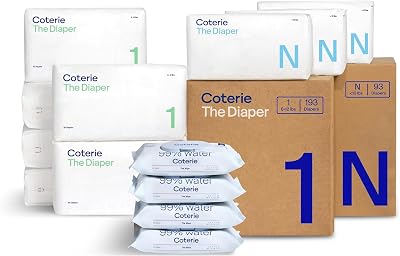
Coterie The Diaper
EWG Verified across every size from newborn to size 7 as of June 2026. Totally chlorine free pulp, full public ingredient list layer by layer, no fragrance, lotion, latex, parabens, or phthalates. Non detect for organic fluorine inside and outside. Highest absorbency in the group and the highest cost per diaper. Linked listing bundles newborn and size 1 diapers with wipes.
View →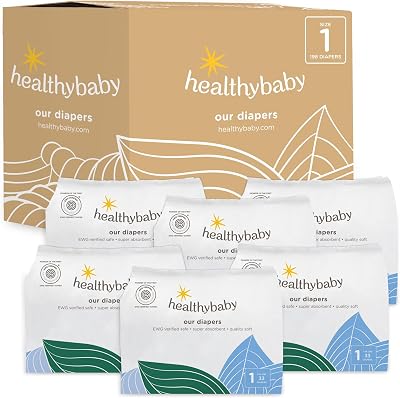
HealthyBaby
The first EWG Verified diaper, screened against more than 3,900 chemicals of concern. Core is 40 percent FSC wood pulp, totally chlorine free, with no elemental chlorine or chlorine dioxide. Topsheet 50 percent plant derived polyethylene, outer cover 15 percent organic cotton. Tested for VOCs, pesticides, and heavy metals. Matches Coterie on every safety measure; pick it if the organic cotton outer cover matters to you.
View →
Eco by Naty
The cheapest of our picks by a clear margin. Totally chlorine free pulp, plant based topsheet, no fragrance or lotion, and non detect for organic fluorine inside and outside in 2023 testing. Swedish brand, widely sold in Europe.
View →
Seventh Generation Sensitive Skin
Totally chlorine free pulp, no fragrance, lotion, or added dyes on the topsheet. Non detect for organic fluorine inside and outside in 2023 testing. Stocked in ordinary grocery and drug stores with no subscription, which is its real advantage. Priced with the premium brands rather than below them, despite the supermarket shelf position.
View →6. Brands That Look Clean but Need Caution
Every brand below is bought because it reads as the clean choice, and each has something in its record the packaging does not show. None has been recalled, and several dispute the findings. Our rule: when equally clean alternatives cost the same, an unresolved question is reason enough to pick something else.
Millie Moon
Tested non detect and is fragrance free, so the formula is not the issue. A Massachusetts class action alleges Target kept marketing the diapers as totally chlorine free after the pulp moved to elemental chlorine free. More seriously, law firms are reviewing roughly 50 parent reports of severe rashes and possible chemical burns since January 2026, with a CPSC complaint filed and local news coverage in May 2026.
Verdict: allegations, not findings, and no recall. But an active complaint cluster on a product worn against broken skin is not one to wave through.
The Honest Company
The diapers tested non detect. The problem is the language: multiple class actions alleged that natural, naturally derived, and plant based labeling covered products containing synthetic ingredients, settled with no admission of fault. Separate litigation over diaper rash despite gentle and hypoallergenic claims was unresolved as of 2026.
Verdict: fine on materials, unreliable on adjectives. Read the ingredient list.
Kudos
The cotton lined diaper parents choose to avoid a plastic topsheet, OEKO-TEX certified. Its size 4 returned the highest disposable result of the 2023 round (up to 53 ppm) while size 5, same materials, was non detect. Kudos retested at Vartest in December 2023 with no PFAS detected, and argues the screening is prone to cross contamination.
Verdict: genuinely unresolved. Not contaminated, but not a pick while two labs disagree.
DYPER
Tested non detect twice, in the 2023 screening and in the brand's own Bureau Veritas testing, with a bamboo viscose core, USDA certified biobased content, and an industrial composting program. But it markets itself as chlorine free without ever claiming TCF, and independent write ups describe its core as elemental chlorine free pulp.
Verdict: exactly the wording pattern this article tells you to read as ECF, so we hold it to our own rule. Fine on contaminants, not a TCF diaper.
Bambo Nature
The Dream diaper returned 18 ppm inside and 22 ppm outside. Low numbers, and an ecolabel covers environmental criteria rather than fluorine, so the two facts do not conflict. The rest of the record is strong: TCF pulp, Asthma Allergy Nordic, OEKO-TEX, EU Ecolabel, FSC, no recall or litigation. Bambo publishes no PFAS testing of its own, and uses "premium" in the titles of both its Dream and classic lines, so the listing name will not tell you which you are holding.
Verdict: worth it for reactive skin. Otherwise Eco by Naty is cheaper and tested clean.
Pampers Pure
The disposables tested non detect. The Pure hybrid cover returned 158 ppm, among the highest in the round, and the parent brand carries the ANSES record above, including a Premium Protection sample still flagged for formaldehyde in 2020.
Eco branded disposables with detections
Attitude Eco 60 ppm, Happy Little Camper 30 ppm, EcoPeaCo Bamboo 28 ppm, BabyCozy 28 ppm, Kirkland Signature 26 ppm, Babyganics Skin Love 12 ppm, Rascal & Friends 10 ppm. One screening round is not a verdict, but if you chose these for their green credentials, that is what the testing did not support.
Hello Bello
Tested non detect and still a fair budget option. The caveat is corporate: Chapter 11 in October 2023, then a private equity acquisition. Ownership changes are when formulations and suppliers shift quietly, so treat pre 2024 testing as historical.
7. Cloth and Reusable Diapers
Cloth is the obvious answer to a disposable problem, and for the absorbent layer it genuinely is. What the 2023 testing showed is that a larger share of cloth products came back positive for PFAS markers than disposables did, 30 percent against 17 percent, and that those hits clustered in one specific place: the waterproof outer layer.
- Covers and all in ones carried the highest numbers in the entire investigation. A GroVia hybrid cover returned 323 ppm, a Bambino Mio Miosolo all in one returned 174 ppm, and a Charlie Banana one size returned 19 ppm despite OEKO-TEX certification.
- Swim diapers were also high, with an Alvababy swim diaper at 173 ppm and a Charlie Banana swim diaper at 100 ppm. Water repellency is the functional requirement most likely to involve fluorinated chemistry, which makes this the least surprising result in the set.
- Natural fiber inserts and prefolds tested clean almost across the board. Thirsties Natural, Rumparooz, Bumgenius, Cloth-EEZ, EcoAble hemp inserts, and Pooters hemp all returned non detect. Two exceptions were minor: OsoCozy at 20 ppm and a Smart Bottoms newborn diaper at 11 ppm.
Best reusable diaper picks
Buy the parts, not a bundle. The absorbent layer and the waterproof layer have completely different risk profiles, so buying them separately lets you put a tested clean fiber against the skin and choose the waterproof layer on its own merits. Every pick below is the exact product that returned non detect inside and outside in the 2023 screening, not simply the same brand.

Cloth-eez Prefolds
100 percent unbleached organic cotton, OEKO-TEX certified, from Green Mountain Diapers and sold direct. Non detect inside and outside in 2023 screening. Cheapest cost per change of any system, sized newborn through toddler, and usable as burp cloths afterward.
View →
EcoAble Hemp Inserts
Four layer hemp and organic cotton doublers, non detect for organic fluorine. Hemp holds more per unit thickness than cotton or microfiber, which is what makes overnight cloth work. Fits pocket diapers and prefold systems.
View →
Rumparooz One Size
The Rumparooz one size from Kanga Care is the exact product that tested non detect inside and outside, in the round where waterproof layers were the worst performing category. Double inner leg gussets, one size from 6 to 35 lbs.
View →
Thirsties Natural One Size
GOTS certified organic cotton absorbency sewn into the cover, so it goes on like a disposable with no folding or stuffing. Non detect inside and outside. Made in the USA. The pick if a caregiver or daycare needs cloth to be simple.
View →One brand to note rather than buy: OsoCozy prefolds are a common budget recommendation but returned 20 ppm, so Cloth-eez is the better prefold.
Cloth also carries a second consideration that is easy to forget: synthetic cover fabrics and microfiber inserts shed in the wash, which is the same mechanism we cover in microplastics in clothing and laundry. Natural fiber inserts sidestep that too.
8. How to Vet a Diaper Brand Yourself
Brands change and testing rounds age. Five checks, in order of how much they tell you.
You can shortcut steps two through four for any brand using our Product Check tool, which now covers the diaper brands in this article along with several hundred others. For the wider nursery, the complete non toxic baby and toddler guide works through bottles, sleep, bath, and clothing on the same evidence standard, and Baby and Kids 101 is the shorter version if you are starting from zero.
9. Frequently Asked Questions
What is the most non toxic diaper brand?
Coterie is our best overall pick. It is EWG Verified in every size from newborn to size 7, uses totally chlorine free pulp, publishes a full layer by layer material list, tested non detect for PFAS markers in independent 2023 testing, and absorbs more than anything else in the category. HealthyBaby matches it on every one of those safety measures and costs about the same, so it is the better choice if you specifically want organic cotton in the outer cover. If price is the deciding factor, Eco by Naty is totally chlorine free and tested non detect at roughly $0.44 a diaper, and Seventh Generation is the easiest clean diaper to find in ordinary grocery stores. For reusables, pair natural fiber prefolds or hemp inserts with a cover from a brand that tested non detect, because the waterproof cover is where cloth testing found problems.
Do diapers contain PFAS?
Some do. In 2023 an EPA certified laboratory commissioned by Mamavation tested 65 diapers from 40 brands for organic fluorine, a screening marker for PFAS. Twenty three percent of products showed organic fluorine above the 10 ppm detection threshold, including 17 percent of disposables and 30 percent of cloth diapers and accessories. Results ranged from 10 to 323 ppm. Organic fluorine is a marker rather than a per compound PFAS measurement, so a detection is a reason to ask questions rather than proof of a specific chemical.
What is the difference between totally chlorine free and elemental chlorine free diapers?
Totally chlorine free (TCF) pulp is bleached with oxygen, hydrogen peroxide, or ozone, with no chlorine compounds at any stage. Elemental chlorine free (ECF) pulp is bleached with chlorine dioxide, which sharply reduces dioxin formation compared to elemental chlorine gas but does not eliminate chlorinated byproducts. TCF is the cleaner process. The distinction matters because many brands market ECF pulp using the phrase chlorine free, which reads to most parents as TCF.
Are Millie Moon diapers safe?
Millie Moon tested non detect for PFAS markers in 2023 independent testing and is fragrance and lotion free, but two separate problems have accumulated. A class action filed in Massachusetts alleges Target continued marketing the diapers as totally chlorine free after the pulp process moved to elemental chlorine free. Separately, consumer law firms are reviewing a cluster of severe rash and chemical burn reports from parents, at least one complaint has been filed with the Consumer Product Safety Commission, and the reports drew local news coverage in May 2026. There has been no recall and no finding of liability, but that is enough uncertainty that we do not list Millie Moon as a clean pick.
Are cloth diapers less toxic than disposables?
Not automatically. The absorbent layer of a cloth diaper is usually cotton, hemp, or bamboo and is genuinely clean, but the waterproof outer cover is a laminated synthetic and that is where testing has found problems. In the 2023 round, 30 percent of cloth diapers and accessories showed organic fluorine, higher than the disposable rate, with the highest single result of 323 ppm on a hybrid cover. Natural fiber inserts and prefolds tested clean almost across the board, so the safest cloth setup pairs cotton or hemp inserts with a cover from a brand that tested non detect.
What chemicals were found in disposable diapers?
In January 2019 the French agency ANSES identified roughly 60 chemicals in disposable diapers, including glyphosate, and concluded that health reference values were exceeded for polycyclic aromatic hydrocarbons, dioxins, furans, and dioxin like PCBs, with formaldehyde and some fragrances also flagged. Follow up testing published in 2020 across 32 products found a marked improvement, with no results above health limits and no glyphosate detected, though three samples still showed formaldehyde levels considered too high. ANSES has since proposed an EU wide restriction on hazardous chemicals in disposable diapers.
Is superabsorbent polymer in diapers dangerous?
Sodium polyacrylate, the gel that shows up as small crystals when a diaper is soaked, is used in every disposable diaper including every clean brand. It is not considered acutely toxic and it replaced the ultra absorbent fibers associated with toxic shock syndrome in the 1980s tampon era. It is a synthetic polymer, so it is fair to want less of it in a landfill, but it is not the layer to worry about. The topsheet, the pulp bleaching, and any added fragrance or lotion matter more.
Related Articles
- Best Non Toxic Baby Wipes
Most wipes are plastic fabric soaked in preservatives. The plastic free picks and the brands facing lawsuits. - Best Non Toxic Diaper Rash Creams and Baby Balms
Independent testing found lead in every zinc oxide diaper cream tested. The one balm that tested clean. - The Non Toxic Baby Registry
123 vetted picks across feeding, sleep, diapers, bath, and travel. No sponsored placements. - Top 100 Baby and Kids Products on Amazon, Reviewed
The best selling baby products rated skip, use carefully, or good choice against the evidence. - The Complete Non Toxic Baby and Toddler Guide
Bottles, sleep, bath, clothing, and gear, category by category. - What Are PFAS?
Where forever chemicals come from, what they do, and how to cut your exposure. - Microplastics in Baby Food
How plastic gets into purees, pouches, and formula prep, and what to do instead.