Microplastics in Clothing and Laundry: How to Reduce Fiber Shedding (2026)
The 30 Second Summary
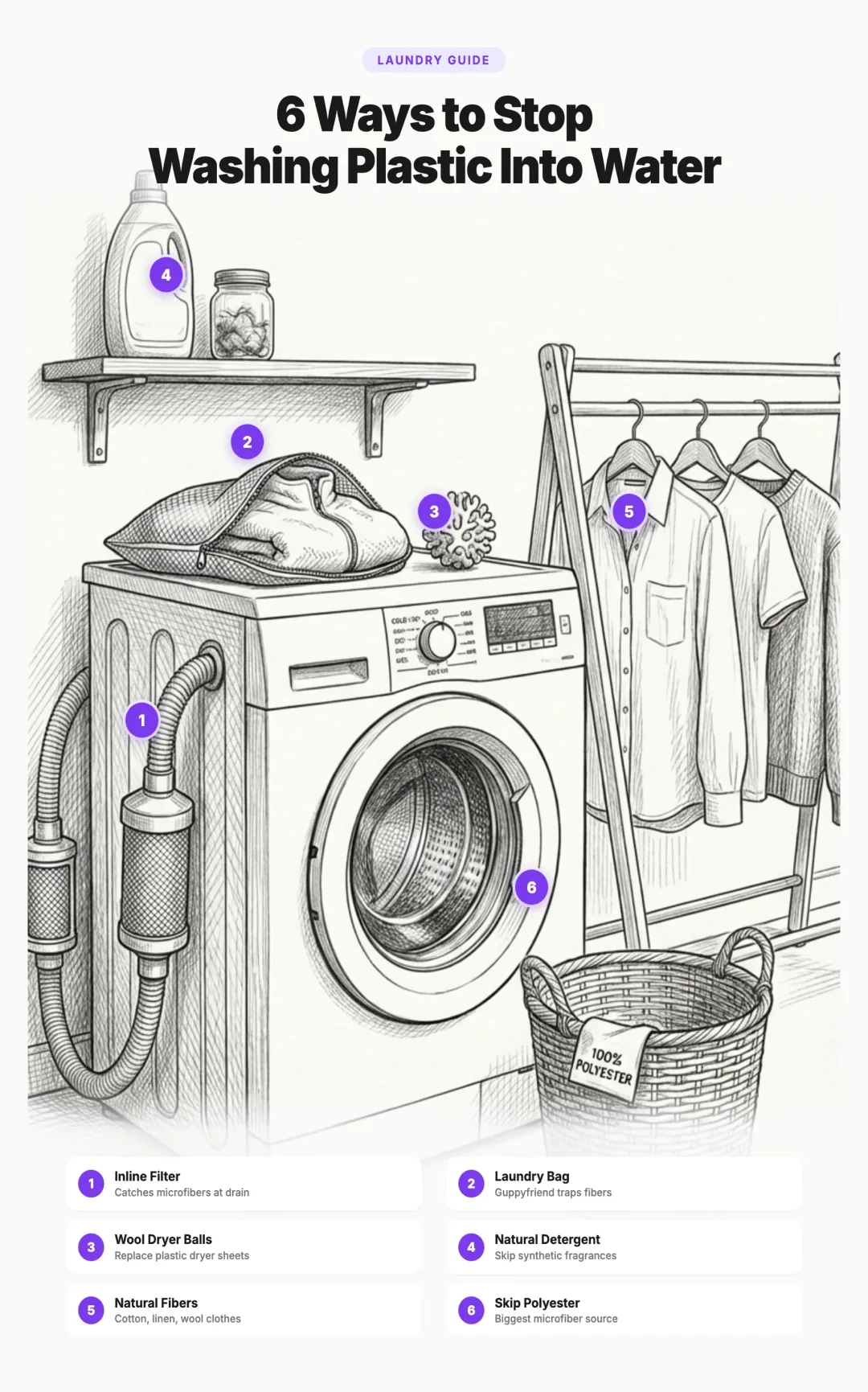
- One wash of synthetic clothing sheds 700,000 to 12 million microfibers. Laundry is the single largest household source of ocean microplastics.
- Acrylic and fleece are the worst offenders. Acrylic shedding rates run roughly 1.5x polyester, and fleece sheds far more than woven synthetics. Polyester cotton blends shed less than pure polyester.
- An external washing machine filter is the highest impact buy. The Filtrol 160 ($150 to $180) catches 80 to 90% of microfibers, far more than any in drum solution.
- For zero install, use a Guppyfriend bag. It cut the microfibers reaching wastewater by about 54% in a 2020 University of Plymouth study.
- Wash cold, wash full, air dry. Cold water, full loads, and shorter cycles cut shedding meaningfully. Dryers add a second round of fiber loss, so when you do use one, swap plastic coated dryer sheets for wool dryer balls and catch exhaust fibers with an all metal duct lint trap.
- Detergent form barely matters, packaging and fragrance do. Top picks: Meliora powder (best overall, plastic free and MADE SAFE), Common Good (best liquid, refillable glass), and Molly's Suds (best value). Skip pods and sheets bound with PVA plastic.
- Buy natural fibers when you can. Cotton, linen, wool, and hemp do not shed plastic, so replacing synthetics over time is the only permanent fix.
Every time you wash a load of synthetic clothing, your washing machine releases hundreds of thousands of tiny plastic fibers into the water. These microfibers are too small for most wastewater treatment plants to capture, and they end up in rivers, lakes, oceans, and eventually in the food you eat and the water you drink. A single wash cycle can shed between 700,000 and 12 million microplastic fibers, depending on the fabrics in the load.
Synthetic textiles are now the largest source of microplastic pollution in the ocean, accounting for roughly 35% of all primary microplastics released into marine environments according to the International Union for Conservation of Nature (IUCN). The average person ingests about 5 grams of microplastic per week, and clothing fibers are a significant contributor. The good news: you can dramatically reduce your laundry's microplastic output with a few targeted changes to how you wash, what you wash with, and what you wear.
1. The Scale of the Problem
Researchers at Plymouth University conducted one of the first major studies on microfiber shedding from domestic laundry in 2016. They found that a single 6 kilogram wash load of acrylic fabric released nearly 730,000 microfibers. Polyester released around 496,000 fibers, and polyester cotton blends released approximately 138,000. These fibers are typically 10 to 30 micrometers in diameter and 1 to 5 millimeters long, small enough to pass through many filtration systems.
The scale becomes staggering when you consider that the average household does 4 to 5 loads of laundry per week. That is potentially 2 to 3 million microfibers per week, or over 100 million fibers per year, from a single household. Multiply that across the roughly 130 million households in the United States alone, and laundry becomes one of the most significant sources of microplastic pollution on the planet.
These fibers do not disappear. Synthetic microfibers have been found in tap water, bottled water, sea salt, honey, beer, shellfish, and even in the air we breathe. A 2019 study by the World Wildlife Fund estimated that people consume approximately 5 grams of plastic per week, roughly the weight of a credit card. Textile fibers are among the most commonly identified microplastic types in environmental samples.
New clothing sheds more fibers than older garments, but shedding continues throughout the life of the garment. Cutting, sewing, and finishing processes during manufacturing leave loose fiber ends that release readily in the first several washes. However, even well worn synthetic clothing continues to shed at a lower but steady rate.
2. Which Fabrics Shed the Most
Not all synthetic fabrics shed equally. The structure, twist, and type of fiber all affect how much a garment sheds during washing. Understanding which fabrics are the worst offenders helps you prioritize which items to replace or treat with extra care.
Data from Napper & Thompson (2016), De Falco et al. (2019), and Hartline et al. (2016). Values represent approximate fibers per standard 6 kg domestic wash cycle.
Acrylic is the worst offender by a wide margin. Acrylic fibers are used in sweaters, blankets, scarves, and knitted accessories. Their bulky, loosely twisted structure makes them especially prone to breakage and shedding during mechanical agitation in the washing machine.
Polyester is the world's most used synthetic fiber, found in everything from athletic wear to bed sheets to fast fashion basics. It sheds about 496,000 fibers per wash. Because polyester is so prevalent (it makes up over 50% of global fiber production), it is the single largest contributor to microfiber pollution by total volume.
Nylon sheds less than polyester and acrylic but still releases significant quantities of microplastic fibers. It is commonly found in activewear, swimwear, hosiery, and outerwear.
Polyester cotton blends shed considerably less than pure synthetics, but the fibers they do shed are still plastic and do not biodegrade. Blends are extremely common in casual clothing, work uniforms, and bed linens.
| Fabric | Fiber Type | Shedding Level | Biodegradable? | Rating |
|---|---|---|---|---|
| Acrylic | Synthetic | Very High (730K per wash) | No | |
| Polyester | Synthetic | High (496K per wash) | No | |
| Nylon | Synthetic | Moderate (290K per wash) | No | |
| Poly/Cotton Blend | Mixed | Lower (138K per wash) | Partially | |
| Organic Cotton | Natural | Low | Yes | |
| Linen | Natural | Very Low | Yes | |
| Hemp | Natural | Very Low | Yes | |
| Wool | Natural | Low | Yes | |
| Tencel (Lyocell) | Semi Synthetic | Low | Yes |
The key distinction is not just how much a fabric sheds, but whether what it sheds is persistent. Cotton, linen, hemp, and wool all shed fibers during washing, but those fibers are natural and biodegradable. They break down in the environment over weeks to months. Synthetic fibers persist for hundreds of years, accumulating in ecosystems and food chains.
3. Washing Machine Filters and Bags
If you have synthetic clothing you cannot replace right away, an external washing machine filter is the most effective way to prevent microfibers from entering waterways. Lower cost zip up wash bags help too, with smaller capture rates but zero installation.

Guppyfriend Washing Bag
Untreated, undyed polyester monofilament mesh. Cut microfibers reaching wastewater by about 54% in a 2020 University of Plymouth study, mostly by reducing shedding. Holds several garments per wash.
View →
Filtrol 160
Reusable mesh, 100 micron filtration, 80 to 90% capture. Fits any standard washer discharge hose.
View →External Lint Filters
External filters are the gold standard for microfiber capture. They install on the outside of your washing machine, typically on the discharge hose, and filter all wastewater before it leaves the machine.
The Filtrol 160 is the most studied external filter on the market. It uses a reusable mesh element that captures fibers down to about 100 micrometers. Independent testing shows it captures 80 to 90% of microfibers. You clean the filter after every few washes, which takes about 30 seconds. It installs on the discharge hose of any standard washing machine and requires no special plumbing.
Microfiber Catching Wash Bags
The Guppyfriend Washing Bag is the most researched microfiber catching laundry bag. It is made from an untreated, undyed polyester monofilament mesh that lets water and detergent through but holds fibers inside, so the bag itself is polyester. In a 2020 University of Plymouth study it cut the microfibers reaching wastewater by about 54%, mostly by reducing shedding through a gentler wash environment inside the bag. The maker's own commissioned tests at Fraunhofer UMSICHT report 79 to 86% less fiber breakage. After washing, you remove the collected fibers from inside the bag and dispose of them in the trash (not down the drain). The bag is large enough to hold several garments per wash.
If you have to choose one solution, an external filter will make the biggest impact. If you want something to start using immediately with no tools, the Guppyfriend bag is the strongest entry point.
4. Washing Habits That Reduce Shedding
How you wash your clothes matters almost as much as what you wash them with. Several research backed changes to your washing routine can significantly reduce microfiber release, and they cost nothing to implement.
Use Cold Water
Research published in Environmental Science and Technology shows that washing at 30 degrees Celsius instead of 40 degrees reduces microfiber shedding by approximately 30%. Higher temperatures weaken synthetic fibers and cause more breakage. Cold water washing also saves energy and is gentler on fabrics, extending the life of your clothes.
Choose Shorter Cycles
The longer your clothes tumble in the machine, the more friction they experience and the more fibers they shed. A 2019 study by De Falco et al. found that reducing wash time from 45 minutes to 15 minutes decreased fiber release significantly. Use the shortest cycle that gets your clothes clean. For everyday wear that is not heavily soiled, a quick or express cycle is usually sufficient.
Wash Full Loads
A full washing machine has less room for clothes to move around and collide with each other. This reduces the mechanical agitation that causes fiber breakage. Running full loads also means fewer total wash cycles per week, which directly reduces total fiber output. Avoid overloading, but aim to fill the drum to about three quarters capacity.
Use the Gentle or Delicate Cycle
The gentle cycle uses slower drum speeds and less agitation. A study from Newcastle University found that the delicate cycle released fewer fibers per wash compared to a standard cotton cycle. This makes sense: less mechanical force means less fiber breakage.
Detergent: Form Barely Matters, Packaging and Fragrance Do
The popular advice to switch from powder to liquid to cut microfiber shedding does not hold up. The large University of Leeds study often credited for it actually found detergent made no measurable difference to fiber release, and a 2023 systematic review concluded the effect of detergent form on shedding "remains unclear." What reliably lowers shedding is how you wash: full loads, colder and shorter cycles, and skipping the dryer. So pick your detergent on the two things that genuinely matter, packaging and fragrance, not on form.
Skip anything that lists "fragrance" or "parfum." In the U.S. that single word is a legally protected trade secret, so it can hide undisclosed compounds, including the phthalate DEP and the synthetic musks engineered to keep clothes smelling fresh for days. Choose fragrance free, or scented only with named essential oils (listed individually, like lavandula angustifolia). And know that most laundry sheets and pods are bound with polyvinyl alcohol (PVA), a petroleum based plastic film that dissolves into your wash water and goes down the drain. Swapping a plastic jug for a dissolving plastic film does not get plastic out of your laundry, it just changes its shape. For a true plastic detox routine, a concentrated powder in cardboard or steel is often the cleanest pick of all, skipping the jug and the PVA in one move.
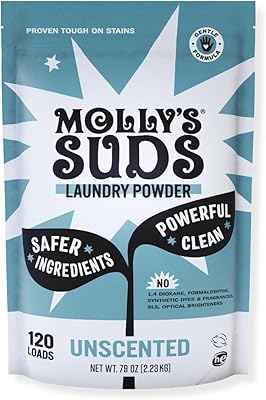
Molly's Suds Original
Sodium carbonate, baking soda, magnesium sulfate, and sea salt. No synthetic fragrance, SLS/SLES, or phthalates. EWG "A" rated, Leaping Bunny certified. Ships in a plastic pouch, so a clean ingredients win, not plastic free.
View →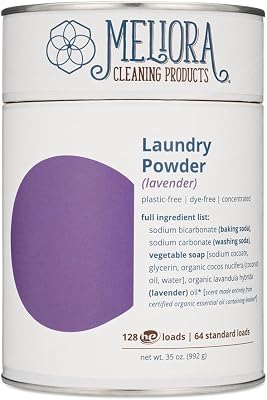
Meliora Laundry Powder
Baking soda, washing soda, and coconut oil soap, with organic essential oils on scented versions plus a fragrance free option. MADE SAFE certified. Paper and steel canister, about 128 HE loads. No plastic jug, liner, or PVA.
View →
Common Good Laundry Detergent
3x concentrate, decyl glucoside based, scented with essential oils or unscented. EWG "A" rated, no synthetic fragrance, sulfates, or phthalates. Refillable glass bottle topped up from pouches or a refill box. Verify the formula on the exact SKU.
View →Reduce Spin Speed
Higher spin speeds create more centrifugal force on fabrics. While high spin is useful for water extraction, it also increases fiber breakage. Reducing spin speed to 800 RPM or lower for synthetic loads can help reduce shedding. Your clothes may come out slightly wetter, but they will shed fewer microfibers.
Data compiled from Napper & Thompson (2016), De Falco et al. (2019), McIlwraith et al. (2019), Napper, Barrett & Thompson (2020), and Kelly et al. (2019). Reduction percentages are approximate and vary by fabric and machine type.
The best approach is to combine several of these methods. Using cold water, a shorter cycle, full loads, and a Guppyfriend bag together could reduce your microfiber output by 70% or more compared to a standard hot wash cycle with no protection.
5. The Dryer Problem
Most of the conversation around laundry microplastics focuses on washing machines and waterways, but your dryer is a significant and often overlooked source of airborne microplastics. When synthetic clothes tumble in a hot dryer, they shed fibers just as they do in a washing machine. The difference is that dryer fibers are vented directly into the air rather than into water.
A 2022 study published in Environmental Science and Technology Letters found that a single dryer cycle can release up to 120 million microfibers into the air through the dryer's exhaust vent. These airborne fibers can travel significant distances and have been found in outdoor air samples, on rooftops, and in remote mountain environments far from any urban area.
What You Can Do About It
Air dry when possible. Line drying or using a drying rack eliminates dryer fiber emissions entirely. It also uses zero energy and is gentler on your clothes, which means they last longer. In humid climates or small apartments, even a portable folding rack near a window works well for most garments.
Clean your lint trap after every load. The lint you see in your dryer's filter is made up of textile fibers, including microplastic fibers from synthetic garments. Cleaning the trap does not prevent fibers from being vented outside, but it does prevent buildup that reduces your dryer's efficiency and can cause more fiber breakage due to longer drying times.
Use lower heat settings. Higher temperatures cause more fiber damage and shedding. Using a low or medium heat setting reduces the thermal stress on synthetic fibers and produces less shedding. If your dryer has an air fluff or no heat option, use it for synthetic garments.
Consider a dryer vent filter. Some companies are developing aftermarket filters that attach to your dryer's exterior vent to capture airborne fibers. This is a newer product category with limited independent testing, but the concept is sound. Check that any filter you install does not restrict airflow, as this can create a fire hazard.
Replace dryer sheets with wool dryer balls. Conventional dryer sheets are coated in synthetic fragrance, quaternary ammonium compounds, and a thin polymer film that transfers onto your clothes. Wool dryer balls do the same job, softening fabric and reducing static, by tumbling alongside the load. They also shorten dry time by 15 to 25%, which lowers heat exposure and therefore fiber breakage.
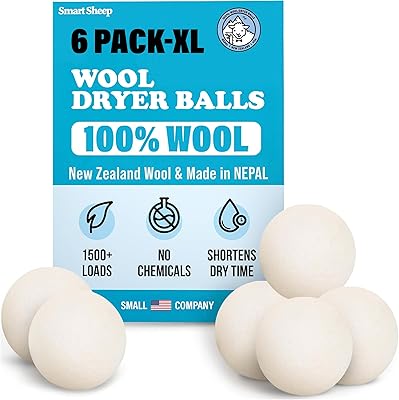
Smart Sheep Wool Dryer Balls
100% New Zealand wool, 6 pack, lasts about 1000 loads. No fragrance, no synthetic film transfer.
View →
Wooden Drying Rack
Folding solid wood rack. Air drying eliminates dryer fiber emissions entirely and extends garment life.
View →
HG Power Duct Lint Trap
All metal inline trap for 4 inch ducts. Stainless steel mesh, two hose clamps included. For indoor venting electric dryers only, never gas.
View →6. Choosing Better Fabrics
The most effective long term strategy for reducing laundry microplastics is to gradually replace synthetic clothing with natural fiber alternatives. Every synthetic garment you retire from your wardrobe means fewer microplastic fibers shed over the remaining years of your laundry routine.
Organic Cotton
Cotton is the most accessible natural fiber alternative to polyester. It is widely available, comfortable, breathable, and affordable. Organic cotton avoids the pesticides and synthetic fertilizers used in conventional cotton farming, making it better for soil and water ecosystems. Cotton does shed fibers, but those fibers are cellulose based and biodegrade naturally. Look for garments labeled 100% organic cotton to avoid blends that include polyester or spandex.
Linen
Linen is made from the flax plant and is one of the most durable and sustainable natural fibers available. It sheds very little compared to both synthetic fabrics and cotton. Linen gets softer with each wash, lasts for decades, and is naturally temperature regulating. It is an excellent choice for shirts, pants, bedding, and summer clothing. The main drawback is that it wrinkles easily, though many people appreciate the relaxed aesthetic.
Hemp
Hemp is arguably the most sustainable fiber on the planet. It grows quickly, requires minimal water and no pesticides, and produces a strong, durable fabric. Hemp fiber sheds very little during washing, and what it does shed is completely biodegradable. Modern hemp clothing has come a long way from the rough, stiff fabric of decades past. Brands like Patagonia, prAna, and Jungmaven offer comfortable, well made hemp garments for everyday wear.
Wool
Wool is a natural protein fiber that sheds minimally during washing and biodegrades fully. Merino wool in particular has become popular for activewear and base layers because it is soft, temperature regulating, odor resistant, and naturally moisture wicking. These properties mean wool garments often need washing less frequently than synthetics, further reducing any fiber release. Wool is not suitable for everyone (some people have sensitivities), but for those who can wear it, it is an excellent alternative to polyester athletic wear.
Tencel (Lyocell)
Tencel is a semi synthetic fiber made from sustainably harvested wood pulp (usually eucalyptus or beech) using a closed loop manufacturing process that recycles 99% of the solvent used. The resulting fiber is silky soft, moisture wicking, and biodegradable. Tencel sheds fibers at a low rate during washing, and because the fibers are cellulose based, they biodegrade in the environment. It is an excellent option for underwear, t shirts, dresses, and bedding.
Where to Start: Natural Fiber Picks
Replacing your most frequently washed synthetics with cotton, linen, wool, and hemp is the only permanent fix. But not every natural sounding fabric is what it claims, and some of the most marketed eco fabrics still shed plastic. Before you swap, read our guide to sustainable fabrics that aren't: it breaks down recycled polyester, bamboo viscose, and superwash wool, and points you to the natural fibers genuinely worth buying instead.
7. What About Recycled Polyester
Recycled polyester, often marketed as rPET, is made from recycled plastic bottles or post consumer plastic waste. It has become a popular sustainability claim among major clothing brands. The appeal is clear: it diverts plastic waste from landfills and reduces the need for virgin petroleum to make new polyester fiber.
However, when it comes to microplastic shedding during laundry, recycled polyester is not a solution. It is still polyester. It still sheds microplastic fibers when washed, and some research suggests it may shed even more than virgin polyester because the recycling process can weaken the fiber structure.
A 2020 study by researchers at the University of California, Santa Barbara found no significant difference in microfiber shedding rates between virgin and recycled polyester garments. Both released comparable quantities of plastic microfibers per wash cycle.
Recycled polyester is better than virgin polyester from a resource extraction standpoint: it uses less energy to produce and keeps plastic bottles out of landfills and oceans. But it does not solve the microfiber problem. If a brand is marketing recycled polyester clothing as "sustainable" or "ocean friendly" without acknowledging the ongoing microfiber shedding issue, that is a form of greenwashing.
The truly sustainable choice for reducing laundry microplastics is to move away from polyester entirely, whether virgin or recycled, and toward natural fibers that biodegrade when they shed.
8. Quick Action Plan
Here is a prioritized list of actions you can take, ordered by impact and ease of implementation:
- Start washing all synthetic clothes in cold water on a short, gentle cycle. This is free, immediate, and reduces shedding by 30% or more. You can start today.
- Buy a Guppyfriend bag and use it for all synthetic garments. This is the cheapest product investment on the list, and in a 2020 University of Plymouth study it cut the fibers reaching wastewater by about 54%. Get one here.
- Choose a plastic free, fragrance free detergent. Detergent form barely affects shedding, so pick on packaging and ingredients instead. A concentrated powder in cardboard or steel, like Meliora, skips both the plastic jug and the PVA film found in pods and sheets.
- Air dry synthetic clothes instead of using the dryer. This completely eliminates airborne microfiber emissions from drying and extends the life of your clothes.
- Install an external washing machine filter. The Filtrol 160 captures 80 to 90% of microfibers. This is the single most effective product you can buy.
- Replace your most frequently washed synthetic items with natural fiber alternatives. Start with basics: cotton or merino wool t shirts, linen shirts, cotton underwear, wool socks.
- When buying new clothes, check the label. Choose 100% natural fibers (cotton, linen, hemp, wool, Tencel) whenever possible. Avoid acrylic entirely. If you must buy synthetic, look for tightly woven fabrics rather than loosely knit ones, as they shed less.
Implementing steps 1 through 4 alone can reduce your household's microfiber pollution by 70% or more. Adding an external filter brings that number above 90%. These are meaningful, measurable changes that directly reduce the amount of plastic entering waterways and air.
Looking for more ways to reduce plastic in your home? Visit our store for curated recommendations on kitchen, bathroom, and cleaning essentials.
Frequently Asked Questions
How many microplastic fibers does a single load of laundry release?
A single load of synthetic clothing can shed between 700,000 and 12 million microplastic fibers per wash, depending on the fabric type, wash temperature, and cycle length. Research from Plymouth University found that acrylic fabrics shed the most, followed by polyester and polyester cotton blends.
Do Guppyfriend washing bags actually work?
Yes. In a 2020 University of Plymouth study, washing synthetics inside a Guppyfriend bag cut the microfibers reaching wastewater by about 54%, mostly because the bag reduces shedding in the first place by creating a gentler washing environment for the clothes inside it. The maker's own commissioned tests at Fraunhofer UMSICHT report 79 to 86% less fiber breakage. You simply place synthetic garments in the bag before putting it in the washing machine.
Does washing in cold water reduce microfiber shedding?
Yes. Research shows that washing at lower temperatures significantly reduces microfiber release. A study published in Environmental Science and Technology found that washing at 30 degrees Celsius instead of 40 degrees reduced fiber shedding by roughly 30%. Cold water also uses less energy and is gentler on your clothes overall.
Is recycled polyester better for microplastic pollution?
Recycled polyester diverts plastic bottles from landfills, which is beneficial, but it still sheds microplastic fibers during washing at similar rates to virgin polyester. Some studies suggest recycled polyester may actually shed more fibers because the recycling process can weaken the fiber structure. It is a step forward for waste reduction but not a solution for microfiber pollution.
What are the best natural fabric alternatives to synthetic clothing?
Organic cotton, linen (made from flax), hemp, wool, and Tencel (lyocell, made from sustainably harvested wood pulp) are the best alternatives. These natural and semi synthetic fibers biodegrade and do not release persistent microplastic particles. They also tend to be more breathable and comfortable than polyester.
Do external washing machine filters remove microfibers?
Yes. External lint filters like the Filtrol 160 attach to your washing machine's discharge hose and capture microfibers before they enter the wastewater system. Studies show these filters can catch up to 80 to 90% of microfibers, making them the most effective single solution available.
Does the dryer release microplastics into the air?
Yes. Tumble dryers vent microfibers into the air through their exhaust. A 2022 study in Environmental Science and Technology Letters found that a single dryer cycle can release up to 120 million microfibers into the air. Unlike washing machine fibers that enter water, dryer fibers become airborne and can be inhaled. Air drying clothes eliminates this problem entirely.
How can I tell if my clothes are made from synthetic fabric?
Check the care label inside your garment. Look for materials listed as polyester, nylon, acrylic, spandex, elastane, lycra, or polypropylene. If the label says any percentage of these materials, the garment will shed microplastic fibers when washed. About 60% of all clothing produced globally contains synthetic fibers.
Related Articles
- Best Non Toxic Laundry Detergent
Sheets sold as plastic free are bound with PVA. The test numbers, the lawsuits, and the detergents worth buying. - Sustainable Fabrics That Aren't (2026)
Recycled polyester, bamboo viscose, superwash wool: the eco labels that hide synthetic shedders. Pair this with the laundry tactics in this guide. - How to Reduce Microplastics in Cleaning Products (2026)
Your cleaning routine is a hidden source of microplastics. Learn how to switch to plastic free alternatives. - How to Avoid BPA and Phthalates in Everyday Products (2026)
These hormone disrupting chemicals hide in plastic packaging, personal care products, and household items. - How to Start Reducing Plastic Exposure (2026)
A beginner's guide to cutting plastic out of your daily routine, room by room.