Best Non Toxic Baby Formula: Four Checks, One Brand Left Standing (2026)
The 30 Second Summary
- The baseline is good, and you should hear that first. The FDA's largest formula testing program ever, over 300 samples and 120,000 data points released in April 2026, found heavy metals below EPA drinking water limits across the board. Every formula on the regulated US shelf is nutritionally complete, and feeding one is always safer than diluting formula or making it at home. Never do either.
- Within that baseline, brands differ, and independent testing shows how. Across two Consumer Reports rounds, 41 formulas in 2025 and 49 more in 2026, roughly half carried at least one contaminant at a level CR flags. The worst arsenic readings, 19.7 and 15.1 ppb in two Abbott hypoallergenic formulas, would fail the 10 ppb standard for drinking water.
- Only one brand family cleared all four of our checks. Bobbie: lactose only carbohydrate with no palm oil, a steel can that tested non detect for BPA, Consumer Reports Top Choices in both rounds plus Clean Label Project certification, and a clean current recall and lawsuit record.
- The recall record is the check most brands fail. ByHeart recalled everything during a 48 infant botulism outbreak in November 2025, Kendamil recalled toxin contaminated formula in Canada in February 2026, and Abbott agreed to a 670 million dollar settlement of preterm formula lawsuits in September 2026.
- The plastic story is your prep setup, not the powder. Polypropylene bottles released up to 16.2 million microplastic particles per liter during standard formula prep in the Nature Food study, thousands of times the powder's own load. Do the hot water step in glass, feed from a glass bottle, and you have removed the biggest plastic exposure in formula feeding.
Formula Is a Regulated Category. Start There.
Most categories we cover are barely regulated. Formula is the opposite: it is one of the most tightly controlled foods in the American supply, with mandatory nutrient minimums, facility registration, and premarket notification to the FDA. In April 2026 the agency published the results of its largest formula testing program ever, over 300 samples collected from 2023 to 2025 and more than 120,000 data points: lead, arsenic, cadmium and mercury all came in below EPA drinking water limits, 99 percent of samples had no detectable pesticides, and 25 of 30 PFAS compounds tested were never detected at all.
We lead with that because formula anxiety has real casualties. Parents scared off the regulated shelf have diluted formula, mixed homemade recipes from internet instructions, and bought unregistered imports, and each of those moves has hurt babies in documented cases. So the ground rules for everything that follows: every FDA registered formula is nutritionally complete, and feeding one, even the cheapest store brand, is always safer than diluting formula or making it at home. Never do either, and talk to your pediatrician before switching a formula that is working. Decisions about preterm and medically fragile infants belong to your medical team, full stop.
And still, registration is a floor, not a guarantee: the recall timeline later in this article happened entirely inside the regulated system, and independent testing keeps finding real differences between brands that all meet the same federal requirements. The FDA's surveillance answers the question is the supply broadly safe. It does not answer the question we get constantly from readers building a registry: if I am choosing anyway, which formula has the cleanest record? That question has a real answer, because two large independent testing rounds, a botulism outbreak, a toxin recall, and the largest settlement in formula litigation history all landed in the last eighteen months, and they did not land evenly.
The Four Checks We Run on Everything
Every verdict on this site, from the Product Check tool to the Top 100, comes from the same four checks. Formula is unusual in that all four carry real weight in one category:
A featured pick has to clear all four. In most categories that bar eliminates a few brands. In formula it eliminated almost everyone.
Check 1: The Ingredient List
The carbohydrate in breast milk is lactose. It is also the most expensive carbohydrate a formula maker can buy, which is why many US formulas, especially sensitive, soy and budget varieties, replace some or all of it with corn syrup solids, glucose syrup solids or maltodextrin. European regulators require formula to be mostly lactose; the US sets no such rule. This is the single clearest label test you can run in the store aisle: read the first three ingredients and look for lactose, not a syrup.
The fat blend is the second read, and palm oil deserves more than the passing mention it usually gets. It appears in many US formulas because it mimics breast milk's palmitic acid content, but it carries the acid in the wrong position on the fat molecule, and in the infant gut the freed palmitic acid binds calcium into insoluble soaps. That is not theory: in randomized trials, babies absorbed 90.4 percent of the fat from a palm olein formula against 97.6 percent from a formula structured like breast milk, absorbed less calcium, showed lower bone mineralization, and passed harder stools. There is a second, less discussed palm problem: refining palm oil at high heat creates 3-MCPD and glycidyl esters, process contaminants that palm carries at 6 to 10 times the level of other oils, and Europe's food safety authority names formula fed infants the most exposed group in the food supply. The EU set formula specific limits for these contaminants in 2018; the US has none. Palm oil in an infant formula ingredient list now reads as an automatic caution in our Product Check. It is a caution rather than a fail on purpose: every regulator permits it and billions of babies have grown up on it, but the measured disadvantage is real, and the European style recipes simply leave it out. We draw the line at palm because the data does: soy, sunflower and coconut oils in formula carry no comparable evidence, and we do not flag ingredients on food trends.
Then there is the DHA: the EU requires DHA in formula at 20 mg per 100 kcal or more, the US does not require it at all, and most brands that do add it extract it from algae with hexane, a petroleum solvent. Hexane free DHA exists; almost nobody uses it.
One ingredient level pattern from the 2026 testing deserves its own line: every plant based formula Consumer Reports tested was flagged for inorganic arsenic. Soy and rice ingredients concentrate arsenic from soil, and it shows up in the finished powder. Soy formula has legitimate medical uses, and if your pediatrician has prescribed it, follow your pediatrician. But nobody should choose plant based formula casually off the shelf, and the American Academy of Pediatrics says the same.
Check 2: The Packaging
Formula packaging has one genuinely good news story: BPA. For decades the epoxy lining of formula cans was a major BPA source, and formula sat against it for its entire shelf life. Industry abandoned BPA linings under pressure, the FDA formally removed BPA epoxy from approved formula packaging in 2013, and the testing now backs the change: in Consumer Reports' 2025 round, 40 of 41 formulas had no detectable BPA. The exception was Enfamil Nutramigen, the only formula where both BPA and acrylamide were detected, a finding Mead Johnson disputes. The caveat we always attach to BPA free claims applies here too: replacement linings are not disclosed, and some substitutes are chemical cousins of the thing they replaced. Our BPA free explainer covers why that matters.
The container format also matters, and here the data is newer. A 2023 peer reviewed study examined 13 varieties of infant milk powder for microplastics and traced part of the load to the packaging itself: an average of 42 particles per 100 grams of powder, with the highest counts in formulas sold in multilayer composite boxes and the lowest in cans. A formula fed infant swallows roughly 49 particles a day from the powder itself at those levels. Steel can beats composite box, and every formula we feature comes in one.
Two honest footnotes. First, the scoop: yes, it is plastic, and it touches the powder with every use. Keep using it, because the scoop is calibrated to the recipe and swapping it for a random spoon gets the ratio wrong, which is a real safety issue rather than a theoretical one. Measure with the scoop, stir with stainless steel. Second, ready to feed liquid: convenient, sterile, and sold in plastic bottles the formula sits against for months. Several ready to feed varieties also landed on Consumer Reports' concerning list in 2026. Powder in a steel can, prepared in glass, is the better default when your pediatrician has not specifically directed otherwise.
Check 3: Independent Tests
Between March 2025 and March 2026, Consumer Reports tested 90 formulas in two rounds, the closest thing this category has to a public reckoning. The first round covered 41 powders; the second added 49 more, including ready to feed liquids.
| Finding | Result |
|---|---|
| Formulas with at least one contaminant at a level CR flags (2025 round) | about half of 41 |
| Highest inorganic arsenic: Abbott EleCare Hypoallergenic | 19.7 ppb |
| Second highest: Similac Alimentum | 15.1 ppb |
| EPA limit for arsenic in drinking water, for scale | 10 ppb |
| Lead readings across the 2025 round | 1.2 to 4.2 ppb |
| Formulas with BPA detected (2025 round) | 1 of 41 |
| Flagged in the 2026 round | 26 of 49 |
| Plant based formulas flagged for inorganic arsenic (2026) | all of them |
Read the flags precisely: CR's thresholds are deliberately stricter than federal requirements, no formula was found to violate an enforceable US limit, and trace lead appeared in everything because it appears in the whole food supply, breast milk included. The value of the testing is comparative. Some brands run consistently at the bottom of the range, and the same names kept landing in the Top Choices tier both years: every Bobbie formula tested, in both rounds, came back non detect or low for lead, arsenic, cadmium, mercury, BPA and acrylamide, and CR named Bobbie a top choice each time. Kendamil, HiPP Dutch Stage 1, Holle Bio Stage 1, Earth's Best Organic Dairy, Kirkland Signature ProCare and several Similac and Enfamil varieties, including 360 Total Care, Gentlease and NeuroPro, also tested clean. Fairness requires saying that plainly: on this one check, plenty of brands pass, including cheap store brands, and if budget is the constraint, a clean testing store brand is a genuinely good choice.
Above watchdog testing sits certification. The Clean Label Project Purity Award tests finished product off the shelf for hundreds of contaminants, and Bobbie holds it along with a Pesticide Free certification, reissued in March 2026. Kabrita, at the other end, publishes its own commissioned batch results, which is transparency worth crediting, but a brand paying for its own tests is the weakest tier of evidence we accept, and the independent lab that had no relationship with Kabrita put it in the worse choices tier.
One finding applies to everyone and deserves honest framing: CR found trace PFAS in nearly every formula tested, mostly obscure compounds at low levels, and one of its experts put the situation exactly right: parents cannot choose their way away from PFAS in an infant's diet. That is a supply chain problem, not a brand problem, and no pick in this article escapes it.
Check 4: Recalls and Lawsuits
This is the check that reordered the category, because the last four years of formula history are a recall timeline.
| Date | Event |
|---|---|
| Feb 2022 | Abbott recalls Similac and other powdered formulas from its Sturgis plant after Cronobacter illnesses and infant deaths. The plant shutdown triggers the national formula shortage. |
| Feb 2023 | Reckitt recalls Enfamil ProSobee lots for possible Cronobacter. |
| Mar 2023 | Perrigo recalls Gerber Good Start SoothePro lots for possible Cronobacter. Some recalled product is shipped to stores anyway. |
| Aug 2023 | The FDA issues warning letters to three formula makers, ByHeart, Reckitt and Perrigo, over how each handled Cronobacter contamination. |
| Nov 2025 | ByHeart recalls every lot of its formula during an infant botulism outbreak: 48 babies across 17 states. |
| Feb 2026 | Canada recalls Kendamil whole milk formula sold at Costco for cereulide, a heat stable bacterial toxin. No US lots are affected. |
| Sep 2026 | Abbott agrees to pay 670 million dollars to resolve roughly 2,000 preterm formula NEC claims, without admitting liability. |
The ByHeart outbreak deserves the full story, because it is the most serious formula safety event since Sturgis and because we recommended the brand before it. In November 2025, ByHeart recalled all of its formula as the CDC and FDA investigated infant botulism cases; the outbreak was declared over in February 2026 at 48 infants in 17 states. The FDA's root cause work found a genetic match between C. botulinum in a formula sample and a sample of organic whole milk powder from a third party supplier, and no explanatory deficiencies at ByHeart's own plants. ByHeart returned to market in June 2026 under an FDA reviewed plan with a new C. botulinum testing protocol. All of that is to the company's credit, and none of it changes our position: after an outbreak that hospitalized 48 babies, we want to see a longer clean record before featuring the brand again. If you have ByHeart cans at home, note that recalled lots carry use by dates into December 2026, so check them against the recall list rather than the date.
The lawsuit file is dominated by NEC, necrotizing enterocolitis, an intestinal disease of premature infants. Hundreds of families have sued Abbott and Mead Johnson, arguing their cow's milk based preterm products, specialized NICU formulas and fortifiers rather than the cans on store shelves, raised NEC risk in preemies and that the companies failed to warn. Juries have split: 60 million dollars against Mead Johnson, 495 million against Abbott, then defense verdicts for both companies in later trials, and a federal docket of roughly 275 cases is still working through bellwethers. In September 2026 Abbott agreed to a 670 million dollar settlement of about 2,000 claims while denying liability. The science, for honesty's sake: the FDA, CDC and NIH issued a consensus statement in October 2024 concluding there is no conclusive evidence that preterm formula causes NEC, and strong evidence that human milk protects against it; prematurity itself is the dominant risk factor. We report the litigation as track record, not as proof of harm, and feeding decisions for premature infants belong to neonatologists, not to articles. But when a track record check asks which companies are spending 2026 in courtrooms over infant products, the answer is the two biggest names on the shelf.
And our pick is not spotless either, which we would rather tell you than have you find: the original Bobbie startup imported a German made formula that the FDA recalled in 2019 because its iron content was below the US minimum and its label did not comply; the recall was terminated in 2020, and the company relaunched in 2021 with the US made, FDA registered recipe sold today. That is the entire record, it predates the current product, and we count it as history rather than a strike. It is also, incidentally, a tidy illustration of why the US premarket rules exist, and why the gray market imports that skip them make us nervous.
The Scorecard
Every major brand against the four checks. Flagged means an adverse independent finding or an unresolved issue on that front; it is not a safety violation.
| Brand | Ingredients | Packaging | Independent tests | Recalls and lawsuits |
|---|---|---|---|---|
| Bobbie | Pass | Pass | Pass | Pass |
| Kendamil | Pass | Pass | Pass | Flagged: 2026 Canada toxin recall |
| ByHeart | Pass | Pass | Pass | Fail: 2025 botulism outbreak recall |
| Similac (Abbott) | Syrups in some varieties; no palm olein | Pass | Alimentum, NeoSure, Total Comfort, EleCare flagged | Sturgis recall; NEC settlement |
| Enfamil (Mead Johnson) | Syrups and palm olein in some varieties | BPA detected in Nutramigen | Nutramigen, ProSobee, PurAmino flagged | 2023 recall; warning letter; NEC litigation |
| Gerber Good Start (Perrigo) | Varies by product | Pass | SoothePro line flagged in CR | 2023 recall; warning letter |
| Kirkland ProCare (Perrigo) | Not a lactose only recipe | Pass | Pass | Manufacturer warning letter |
| Earth's Best Organic | Palm olein blend; Sensitivity uses glucose syrup | Pass | Pass | Pass |
| HiPP and Holle (imported) | Pass | Pass | Pass | Gray market channel; 2021 import recall |
| Kabrita | Pass | Pass | CR worse choices tier | Pass |
| Soy and plant based (category) | Arsenic concentrating ingredients | Pass | Every one tested was flagged | Varies |
Formula brands land in our Product Check tool constantly, and every brand in this table now has a current entry. Type any brand in there for our verdict, and the reasoning, in ten seconds.
Why Bobbie Is the Recommendation
Walk the four checks and the recommendation writes itself.
Ingredients. Organic lactose is the only carbohydrate, there is no corn syrup, glucose syrup or maltodextrin anywhere in the line, and no palm oil. The whey to casein ratio is set at 60 to 40 to match mature breast milk. The DHA is in at the EU required 20 mg per 100 kcal, extracted without hexane, and iron meets both the US and EU requirements at 1.2 mg per 100 kcal. It is the European style recipe, built inside the US regulatory system.
Packaging. A steel can, the format that carried the lowest microplastic counts in the powder packaging study, and Consumer Reports found no detectable BPA in any Bobbie formula.
Independent tests. This is where Bobbie separates. Top Choices tier in the 2025 round, and in the 2026 round all four Bobbie formulas tested non detect or low across lead, inorganic arsenic, cadmium, mercury, BPA and acrylamide. On top of the watchdog results sits Clean Label Project certification, both the Purity Award and the Pesticide Free mark, renewed in March 2026. No other brand family stacked both years of clean watchdog results and current independent certification.
Recalls and lawsuits. The current company's record is clean: no recalls of the US made formula, no litigation we could find after an adversarial search. The 2019 recall of the original imported product is disclosed above. Worth knowing on the durability of that record: since 2023 Bobbie has owned its own manufacturing, a plant in Heath, Ohio that was the first newly built formula facility in the US in four decades, which means its supply chain does not run through the contract manufacturers that appear repeatedly in the recall timeline.
The honest cons: Bobbie is a premium price product, sold on subscription from its own site and in cans at Target, Whole Foods, Walmart and other grocers. Its Amazon listings existed but had no buyable offer when we published, so our links go direct. It shares the whole category's trace PFAS reality. And it makes nothing for special medical needs: hypoallergenic and preterm nutrition stay with your pediatrician.
Our Picks
Every pick passed the same four checks we run on everything: the ingredient list, the packaging, independent tests, and the recall and lawsuit record. Bobbie sells direct and through grocery retailers; the links below go to the maker's own store, and we earn nothing from them.
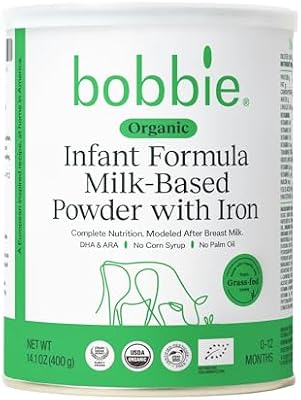
Bobbie Organic Original
USDA Organic, lactose only carbohydrate, no palm oil, DHA 20 mg per 100 kcal without hexane. Clean Label Project Purity Award. CR Top Choices, 2025 and 2026. Steel can.
View →
Bobbie Organic Gentle
Same organic base with 100 percent partially hydrolyzed whey for easier digestion, still lactose only and palm oil free. Tested non detect or low in the 2026 CR round.
View →
Bobbie Organic Whole Milk
Whole milk fat replaces part of the vegetable oil blend, the recipe Kendamil made popular, from the brand family with the cleaner recall record. CR Top Choices tier.
View →If the budget does not stretch to a premium formula, we mean what we wrote above: Kirkland Signature ProCare and several other store brands sat in Consumer Reports' cleanest tier, and a clean testing budget formula from a regulated US shelf beats financial stress every time. The scorecard flags on those brands are context for choosing between options, not warnings against feeding your baby.
The Brands We Did Not Pick
ByHeart
The frustrating one, because the recipe and the testing record were genuinely good, and we said so in earlier coverage. Then came the November 2025 recall of every lot during the 48 infant botulism outbreak, traced by genetic match to a supplier's organic whole milk powder rather than to ByHeart's own plants. The company handled the aftermath seriously: full recall, a new C. botulinum testing protocol, an FDA reviewed return to market in June 2026. Our bar is unchanged by good crisis management: after an outbreak that hospitalized babies, a brand earns its way back with time, and ten weeks back on shelves is not a track record. Check any cans in your home against the recall list; recalled lots carry use by dates into December 2026.
Kendamil
The whole milk recipe that built the brand is real, its US sold formulas tested clean in Consumer Reports' rounds, and until February 2026 it was the obvious runner up. Then Canada recalled Kendamil whole milk formula sold at Costco for cereulide, a heat stable toxin produced by Bacillus cereus, in lots manufactured in May 2025. No US product was affected, and we state that plainly. But a bacterial toxin reaching finished cans anywhere in the supply chain is exactly what our fourth check exists to catch, and 2026 also saw Kendamil agree, after an advertising challenge, to discontinue several marketing claims including that its formula delivers better nutrition than competitors. Clean tests plus a fresh toxin recall lands at wait, not at pick.
HiPP and Holle
The European organic brands earn their reputation on ingredients, and the cans Consumer Reports got hold of tested clean. The problem is everything around the can: neither brand is FDA registered, US sales run through gray market importers, and in 2021 the FDA recalled a long list of imported HiPP and Holle products for iron below the US minimum and missing premarket notifications. An import outside the system also sits outside the recall notification chain, so if a batch is pulled in Europe, no one is obligated to tell an American parent. The European style recipe without the import gamble is exactly the niche Bobbie was built to fill.
Kabrita and Dr. Brown's SoothePro
Kabrita's goat milk formula markets heavily on gentleness and publishes its own commissioned batch testing, and Consumer Reports' independent round still placed it in the worse choices tier after detecting both arsenic and lead. Dr. Brown's SoothePro, a formula line made by Perrigo under the bottle brand's name, landed in the same tier. Neither result is a regulatory violation, and Kabrita disputes the framing. But when the brand's own numbers and the independent lab disagree, we go with the lab that was not paid by the brand.
Similac and Enfamil
Evenhandedness requires both halves. Several mainline varieties, Similac 360 Total Care and Advance, Enfamil Gentlease and NeuroPro among them, tested clean in Consumer Reports' rounds, and millions of babies thrive on them. The record around them is why they are not picks: the highest arsenic readings in the 2025 round were both Abbott hypoallergenic formulas, Nutramigen was the only formula with detectable BPA, both companies spent 2022 to 2023 in the recall timeline, and both spent 2026 in NEC courtrooms, with Abbott settling roughly 2,000 claims for 670 million dollars in September. The federal science consensus says preterm formula is not conclusively a cause of NEC, and we report that alongside the settlement. A track record check is still a track record check.
The Prep Setup Sheds More Plastic Than the Powder
Here is the part of formula feeding this site exists to cover, and it is not the brand on the can. In 2020, researchers at Trinity College Dublin prepared formula in polypropylene baby bottles following standard WHO guidance and measured what came off the plastic: up to 16.2 million microplastic particles per liter. Heat drove the release: raising water temperature from 25 to 95 degrees Celsius pushed shedding from 0.6 million to 55 million particles per liter, and sterilizing the bottle made it worse. Their global estimate put the average bottle fed infant at about 1.6 million ingested particles a day, and over 4 million in the highest regions.
Compare the numbers: roughly 49 particles a day from the powder, potentially millions from the bottle. Choosing the cleanest powder and preparing it in polypropylene is optimizing the wrong variable. The fix costs two swaps and no safety compromise:
- Do the hot step in glass or steel. Formula prep for young infants uses water at 70 degrees Celsius or hotter to kill Cronobacter, which is precisely the temperature that maximizes plastic shedding. Boil, then mix powder and hot water in a glass container, let it cool to feeding temperature, and only then pour into the feeding bottle. Follow your pediatrician's prep guidance on water temperature; whatever it is, run the hot part of it in glass.
- Feed from a glass or stainless bottle. Our baby bottle guide tested this category properly: Lifefactory glass is the best overall, Evenflo Classic Glass is the budget answer at a fraction of the price, and single wall stainless covers travel.
- Mix with filtered water. Formula reconstitutes at roughly 87 percent water, so the water is most of the meal. Reverse osmosis is the standard we recommend for formula mixing: it removes lead, arsenic, PFAS and microplastics in one pass.
- Measure with the scoop, stir with steel. The scoop is calibrated; keep it. The stirring spoon is not; make it stainless.
The full feeding setup, bottles through first foods, is in our microplastics in baby food guide.
Frequently Asked Questions
What is the safest baby formula in 2026?
Start with the reassuring baseline: the FDA's largest formula testing program ever, over 300 samples and 120,000 data points released in April 2026, found heavy metals below EPA drinking water limits across the board, and every formula on the regulated US shelf is nutritionally complete. Registration is a floor rather than a guarantee, though: independent testing keeps finding real differences between brands, and the recent recalls all happened inside the regulated system. Bobbie was the only brand family that cleared all four of our checks: lactose as the only carbohydrate with no palm oil, a steel can that tested non detect for BPA, Consumer Reports Top Choices placement in both the 2025 and 2026 rounds plus Clean Label Project certification, and a clean current recall and lawsuit record. Always talk to your pediatrician before switching a formula that is working.
Is European baby formula like HiPP or Holle safer than American formula?
The powder itself tested fine: Consumer Reports found low contaminant levels in both HiPP Dutch Stage 1 and Holle Bio Stage 1. The supply chain is the problem. Neither brand is FDA registered, so the versions sold in the US move through gray market importers, outside the US recall notification system. In 2021 the FDA recalled a long list of imported HiPP and Holle products because they contained less iron than the US minimum and had never filed the required premarket notification. If a European batch is ever recalled at home, no US system is obligated to tell you. An FDA registered formula built to the same European style recipe avoids the whole problem.
Is ByHeart formula safe now?
ByHeart recalled every lot of its formula in November 2025 during an infant botulism outbreak that sickened 48 babies across 17 states. The FDA later reported a genetic match between C. botulinum in a formula sample and a sample of organic whole milk powder from a third party supplier, and found no explanatory deficiencies at ByHeart's own plants. The outbreak was declared over in February 2026 and ByHeart returned to market in June 2026 under an FDA reviewed plan with a new C. botulinum testing protocol. Two cautions stand: recalled cans carry use by dates into December 2026, so check any can already in your home against the recall list, and we want to see a longer clean track record after an outbreak this serious before featuring the brand again.
Does baby formula contain microplastics?
Yes, but the powder is the small number. A 2023 peer reviewed study of 13 formula powders found an average of 42 microplastic particles per 100 grams, worst in composite box packaging and lowest in cans, which works out to roughly 49 particles a day for a formula fed infant. Preparation is the big number: the Nature Food bottle study found polypropylene baby bottles released up to 16.2 million particles per liter during standard formula prep, because hot water against plastic is exactly what drives release. The powder brand matters far less here than the bottle material. Prepare in glass or stainless steel and the exposure drops by orders of magnitude.
Which baby formulas did Consumer Reports flag?
In the March 2025 round of 41 powders, the highest inorganic arsenic readings were Abbott EleCare Hypoallergenic at 19.7 ppb and Similac Alimentum at 15.1 ppb, against the 10 ppb the EPA allows in drinking water. The other formulas on the worse choices list were Enfamil Nutramigen, the only formula where BPA and acrylamide were detected, Enfamil ProSobee Simply Plant Based, PurAmino Hypoallergenic, Similac NeoSure, Similac Total Comfort, Kabrita goat milk formula, Dr. Browns SoothePro, and Up and Up Soy. In the March 2026 round of 49 more formulas, 26 contained at least one contaminant at a level CR considers concerning, three powders exceeded its lead threshold, and every plant based formula tested was flagged for inorganic arsenic. Many formulas in both rounds also tested clean, including every Bobbie formula.
Is homemade or diluted baby formula ever safe?
No. This is the one place where the do it yourself instinct that serves you well everywhere else on this site can seriously hurt a baby. Homemade formula recipes have repeatedly caused hospitalizations for nutrient deficiencies, and diluting formula to stretch a can disrupts an infant's electrolyte balance. Nothing in this article is a reason to make either move. If cost is the constraint, several store brand formulas tested clean for heavy metals in Consumer Reports testing, WIC covers formula for qualifying families, and your pediatrician has seen this problem before and can help. A budget formula from a regulated US shelf, ideally one that tested clean, is a far safer way to feed a baby than homemade formula will ever be.
Related Articles
- Best Non Toxic Baby Bottles
The other half of formula feeding: the glass and steel bottles that shed nothing into the milk. - Microplastics in Baby Food
The safest feeding setup from first bottle to first foods. - Best Water Filters
Formula is 87 percent water. The reverse osmosis systems that clean it properly. - Non Toxic Baby and Toddler Products Guide
The full product by product guide, from bottles to bath time. - Baby and Kids 101
The 23 swaps that matter most for families, in order of impact. - Top 100 Baby and Kids Products on Amazon
The most popular baby products, rated with the same four checks.