Strollers Without PFAS or Flame Retardants: What Testing Found, and the Closest Picks (2026)
The 30 Second Summary
- The bigger stroller problem is PFAS, not flame retardants. No federal fire rule covers strollers, and the latest US testing found no flame retardant in any stroller's upholstery but organic fluorine on all four stroller fabrics, two of them above California's limit.
- The PFAS sits in the water repellent. It is the finish that makes a canopy and seat shed rain, so a stroller sold as water resistant needs a named, PFAS free finish.
- Read what the claim covers. Ask for no added flame retardants in the fabric and the foam, and PFAS free as a class, not just "no PFOA or PFOS".
- No stroller meets our standard yet, because no maker publishes a certificate number that tests the finished fabric, and no lab has tested a current model in the last three years.
- The closest are the Bumbleride Era and Indie, the Ergobaby Metro 3 and the Zoe Twin V3. Each maker denies flame retardants in the fabric and the foam and denies PFAS, in writing. None can show a certificate or a current test.
Why a Stroller Is Not a Car Seat
A car seat carries flame retardants because federal law makes it pass a vehicle fire test. A stroller has no such rule. Nothing in the federal stroller standard asks the fabric to resist a flame, and California has banned flame retardants above 1,000 ppm in strollers since 2020. So most stroller fabric is sold without them, and when the same lab took apart car seats and the strollers sold with them in 2022, the seats carried flame retardants and the strollers did not.
What strollers do carry is a water repellent. A canopy and seat that shed rain and juice have usually been treated, and the cheapest durable finishes are fluorinated, which makes them PFAS, the forever chemicals that do not break down in the body. A child sits against that fabric for an hour or two a day, often in sun, and mouths the bumper bar. The question for a stroller is mostly which finish is on the fabric, and secondly what is in the foam under it.
What Testing Found
The strongest US data comes from the Ecology Center's 2022 Toxic Inequities report, which took apart four travel systems bought in 2020 and 2021. None of the four strollers had a bromine or phosphorus flame retardant in its upholstery, though the matching car seats did. All four stroller fabrics carried organic fluorine, a marker of PFAS: the Baby Trend Envy's seat read 363 ppm, the Graco Verb's seat cover 247, the Safety 1st Smooth Ride's cover 45 and the Cosco Lift and Stroll's shade 16.
The same report found the foam on the handlebars held 8.7 to 10.7 percent chlorine, with chlorinated paraffins, a family of flame retardants and plasticizers, named in the Cosco and Safety 1st foam. Mamavation had swatches from premium brands checked for total fluorine the same year, at a 10 ppm detection limit. A Bugaboo Bee read 524 and 28 ppm, a Babyzen swatch 188, a Joolz swatch 141 and 12, and one of two UPPAbaby swatches 25. Nuna's MIXX next and a Bumbleride swatch read below 10. The lab was not named, most models and parts were not stated, and there has been no second round.
European testers have been busier. Denmark's consumer council, Taenk, found PFAS in four of nine buggies in March 2024, and in August 2026 found banned PFAS in the carrycot mattress cover and DEHP, a phthalate, in the rain cover of a Baby Jogger City Mini GT2 double. Germany's Stiftung Warentest put one 2024 buggy over the EU PFAS limit, and its July 2026 round with Austria's VKI found DEHP over the legal limit in a seat bar and in a weather cover. Neither publishes its values for free, and most of those models are not sold in the US.
| Study | What was tested | What it found |
|---|---|---|
| Ecology Center, 2022 | 4 US travel system strollers, bought 2020 and 2021 | No flame retardant in any stroller's upholstery; organic fluorine on all four, 16 to 363 ppm; chlorinated paraffins in two handlebar foams |
| Mamavation, 2022 | Swatches from 6 premium brands, lab not named | Organic fluorine 12 to 524 ppm on four brands; none detected on Nuna and Bumbleride |
| Washington Ecology, 2024 | 1 stroller seat fabric | Six regulated flame retardants, each below the 100 ppm reporting limit |
| Taenk, Denmark, 2024 and 2026 | 9 buggies, then a 2026 pram round | PFAS in four of nine; banned PFAS and DEHP in parts of a City Mini GT2 double |
| Stiftung Warentest and VKI, 2024 and 2026 | Buggies and prams sold in Europe | One buggy over the EU PFAS limit; DEHP over the limit in a seat bar and a weather cover |
Where the Chemicals Sit in a Stroller
The fabric. Seat, canopy and bassinet are almost always polyester or nylon, and the fiber matters less than the finish. A water repellent that leaves a fabric beading after rain can be fluorinated or not, and a maker that switched will usually say so. Bumbleride dates its PFAS free repellent to 2020, and Zoe waterproofs with a polyethylene coating rather than a repellent at all.
The foam. Seat pads and bassinet mattresses are often polyurethane foam, which is where flame retardants have turned up in other baby gear. Strollers mostly skip them now, but not all: one large maker has reported a flame retardant at 10,000 ppm or more in its stroller plastics or foams to three states every year since 2018. A claim that names the foam, or a stroller padded with untreated polyester batting, closes that gap.
The bars and the rain cover. A bumper bar wrapped in foam or faux leather is the part a teething toddler mouths, and the 2022 and 2026 results put chlorinated paraffins and DEHP in handlebar foam and seat bars. Rain covers are usually PVC, which needs a plasticizer to stay soft. The frame, wheels and fold hardware are aluminum, steel and plastic in every stroller sold, and a child does not sit on them.
What the Law Covers
California's AB 2998 names strollers among the juvenile products that cannot contain more than 1,000 ppm of flame retardant chemicals, from January 2020. Its AB 652 bans intentionally added PFAS, or 100 ppm of total organic fluorine, in the same products from July 2023. Colorado, Minnesota, Maine and Vermont now ban added PFAS in juvenile products including strollers, and New Mexico follows in 2027.
Those laws set a floor, and they have limits. A threshold of 1,000 ppm still allows a treatment below it, a PFAS ban relies on the maker's own word unless a state tests, and a stroller bought before the dates, new or used, was made under none of them. There is no federal limit on either chemistry in a stroller.
Reading a Stroller Claim
Three questions separate the claims. Does the flame retardant claim name the foam as well as the fabric? Does the PFAS claim cover the whole class, or only PFOA and PFOS, two of thousands? And has anyone independent checked it? A maker's own state chemical filing is worth a look too, because it is a legal disclosure rather than marketing, and one maker's filing says the opposite of its product page.
Checking a claim takes a certificate that tests the finished fabric, OEKO-TEX Standard 100, GOTS, MADE SAFE or bluesign, with a number you can look up, or an independent lab result under three years old. No stroller maker we researched publishes a certificate number we could verify, and the newest US lab results date from 2022. GREENGUARD Gold, which Zoe, Nuna and others hold, measures what a product releases into the air, not what is in the fabric, so it says nothing either way about flame retardants or PFAS.
Wondering about the stroller you already own? Type the brand into our free Product Check to see what we know about its fabric, recalls and lawsuits.
The Big Brands at a Glance
Fifteen stroller brands, grouped by what the maker states. The flame retardant column asks whether the maker denies them in the fabric and the foam. The PFAS column asks whether the maker calls its strollers PFAS free. The testing column shows only what independent labs found, because a company statement is not proof. Recalls cover strollers since November 2021. The order within a group is not a ranking.
| Brand | No flame retardants, fabric and foam? | PFAS free? | Independent testing | Stroller recalls since 2021 |
|---|---|---|---|---|
| Denies both | ||||
Bumbleride Era, Indie, Indie Twin | Yes, since 2013Fabric, foam and padding | Yes, since 2020 | ExpiredNone detected, 2022 | None |
Zoe Sold direct | YesNo polyurethane foam | YesPolyethylene coating | Not tested | NoneTraveler rated Don't Buy for tipping |
Ergobaby Metro 3 | Yes, brand wide | Yes, brand wideA carrier rain cover drew a PFOA notice | Not tested | None |
Chicco Bravo, Corso, Liteway | ContradictedOwn filings report one in plastics or foam | Yes | Not tested | None |
| Denies flame retardants only | ||||
Graco Modes, FastAction, Ready2Grow | Yes, since 2014 | No claim | FlaggedVerb seat cover 247 ppm, 2022 | None |
Mockingbird Single to Double 3.0 | YesFoam included | PartlyPFOA and PFOS only | Not tested | 2Frame cracks, earlier lots |
| Denies PFAS only | ||||
Bugaboo Fox 5, Butterfly 2, Dragonfly | No claim | Yes, current fabric | FlaggedBee 524 ppm, 2022 | 1Dragonfly seat, 2023 |
Stokke YOYO Babyzen YOYO3, YOYO5 | No claim"Prefers not to" use them | Yes, brand wide | Flagged188 ppm, 2022 | 1YOYO3 brake, 2024 |
Joolz Hub2, Aer2 | No claim | Yes, brand wide | Flagged141 ppm, 2022 | 1Hub2 wheels, UK, 2025 |
Thule Urban Glide 3, Spring 2 | No claim | Yes, since 2024New textiles | Not tested | None |
| No stroller claim | ||||
UPPAbaby Vista, Cruz, Minu | NoCar seats only | No claim | Low reading25 ppm, 2022 | 1RIDGE brakes, 2022 |
Nuna MIXX next, TRIV next, TRVL | NoCar seats only | No claim | ExpiredNone detected, 2022 | None |
Cybex Priam, Gazelle S, Libelle | NoCar seats only | No claim | Not tested | NoneThree car seat recalls |
Evenflo Pivot Xpand, Shyft | PartlyGreen and Gentle fabric only | No claim | Not tested | NoneNine car seat recalls |
Baby Jogger City Mini GT2, City Select 2 | No claim | No claim | FlaggedGT2 double parts, Denmark 2026 | None |
The Closest We Found
No stroller meets our standard yet. It asks three things: the maker states that the fabric and the foam carry no added flame retardants and that the stroller is PFAS free; a certificate that tests the finished fabric, or an independent test from the last three years, backs that up; and the model carries no open recall. The strollers below make the whole claim in the maker's own current words, and the maker's own filings do not contradict it. None can show the proof, so we name what each is missing.

Ergobaby Metro 3 Compact Stroller
100% polyester seat and canopy on an aluminum frame. Ergobaby states no flame retardants and materials tested free of PFAS, brand wide. No certificate or independent test published.
View →
Bumbleride Era Reversible Stroller
Recycled polyester with a PFAS free water repellent, untreated polyester batting instead of foam, cork handlebar. No fire retardants stated since 2013. OEKO-TEX claimed without a certificate number.
View →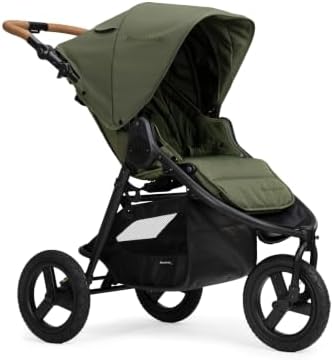
Bumbleride Indie All Terrain Stroller
Recycled polyester with a PFAS free water repellent, untreated polyester padding, air filled tires. The same fire retardant free statement as the Era, and the same missing certificate number.
View →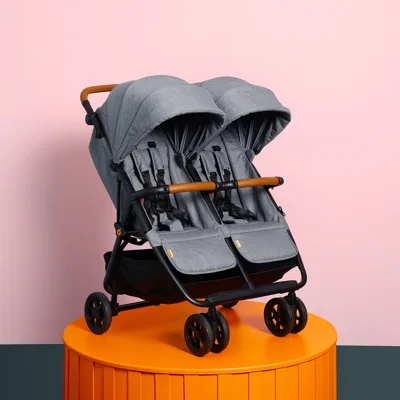
Zoe Twin V3 Double Stroller
Side by side double in polyester waterproofed with a polyethylene coating, no polyurethane foam. Zoe states no flame retardants and no PFAS. GREENGUARD Gold only, which measures emissions.
View →Ergobaby, the compact pick
Ergobaby's help center says its materials are tested to be free of PFAS, PVC, BPA and harmful phthalates, and that no flame retardants are used. That covers the fabric and the foam of everything it sells, which makes it the only compact stroller maker we found to deny both chemistries in writing. The Metro 3's seat and canopy are 100 percent polyester, and owners rate it 4.2 from 173 reviews. Choose the standard Metro 3 over the Deluxe, whose faux leather bar is a material Ergobaby does not name.
What is missing is the test it says it runs. Ergobaby publishes no report and no certificate, and the canopy's water resistant finish is not named. In December 2025 a California notice alleged PFOA in an Ergobaby carrier rain cover, settled in July 2026 on warning labels, which is reason enough to want a lab to confirm the stroller fabric. The 2021 buckle recall covered the first generation Metro, not this one.
Bumbleride, the most complete claim
Bumbleride's FAQ says that since summer 2013 its products contain no fire retardants in foam, fabric or padding, everywhere except the UK, where the law requires them. Its padding has been untreated polyester batting since 2017, and its fabric's water repellent has been PFAS free since 2020, after earlier fluorinated versions. A Bumbleride swatch also read no organic fluorine in 2022. Owners on its own site rate the Era 4.7 from 31 reviews and the Indie 4.9 from 28.
What is missing is a number. Bumbleride says its fabric and padding are OEKO-TEX Standard 100 certified but prints no certificate number, and OEKO-TEX's buying guide lists no Bumbleride holder, so the claim cannot be looked up. The 2022 result is past our three year limit and named no model. Its FAQ also mentions a vinyl backrest board behind the seat fabric, which is not where a child's skin sits. Its last recalls, for wheels in 2012 and a jogger in Canada in 2018, are long closed.
Zoe, for two children
Zoe's support page says every Zoe stroller is free of flame retardants and polyurethane foam, and free of PFAS, phthalates and BPA, and that the seat and canopy are waterproofed with a polyethylene coating rather than a fluorinated repellent. That names the finish, which most makers do not. The Twin V3 carries 4.9 from 1,520 reviews on Zoe's own site, a count that likely includes the earlier version. The belly bar is faux leather, which a toddler will chew.
What is missing is any check. Zoe's only certificate is GREENGUARD Gold, which measures emissions, and no lab has tested a Zoe stroller. We do not pick its single, the Traveler: Consumer Reports rated it Don't Buy in February 2026 after it tipped backward on an incline when fully reclined with 45 pounds aboard. Zoe disputes the finding, and no recall has followed.
The Picks Side by Side
| Stroller | Type | Fabric | Padding | Water repellent |
|---|---|---|---|---|
| Ergobaby Metro 3 | Compact | 100% polyester | Not named | Not named |
| Bumbleride Era | Full size, reversible seat | Recycled polyester | Untreated polyester batting | PFAS free since 2020 |
| Bumbleride Indie | All terrain | Recycled polyester | Untreated polyester batting | PFAS free since 2020 |
| Zoe Twin V3 | Side by side double | Polyester | No polyurethane foam | Polyethylene coating |
Half a Claim
These brands deny one chemistry and say nothing about the other, or deny part of it.
Bugaboo, Stokke YOYO, Joolz and Thule
Bugaboo calls the fabric on the Fox 5 Renew, Butterfly 2 and Dragonfly PFAS free, but publishes no flame retardant statement and no certificate, and a Bugaboo Bee swatch read 524 ppm organic fluorine in 2022, before the change. Stokke says its YOYO strollers are made without PFAS, says it only prefers not to use flame retardants, and recalled about 2,890 YOYO3s in November 2024 for a parking brake that can disengage.
Joolz says all its products are PFAS free and publishes nothing on flame retardants; its Hub2 manual tells owners to spray the wheels with a Teflon lubricant, which is a PFAS. Thule says it has used no intentional PFAS in new textiles since January 2024, which covers the Urban Glide 3 and Spring 2, and makes no flame retardant statement for any stroller.
Graco and Mockingbird
Graco says every stroller it has made since January 2014 is free of added flame retardants, and the 2022 testing agreed: the Verb's upholstery carried none. The same seat cover read 247 ppm organic fluorine, over California's limit, and Graco makes no PFAS statement for the Modes, FastAction or Ready2Grow.
Mockingbird says its products contain no flame retardant chemicals, a statement that reaches the polyurethane foam in its seat. Its chemical list rules out only PFOA and PFOS rather than PFAS as a class, and it does not say what makes the canopy water resistant. Two 2022 and 2023 recalls for cracking frames covered earlier lots, not the Single to Double 3.0.
Brands We Did Not Pick
Chicco and Evenflo
Chicco's stroller pages say each model is produced without intentionally added fire retardant chemical treatments, PFAS, BPA or phthalates. Its parent Artsana has reported triphenyl phosphate, with the function flame retardant, at 10,000 ppm or more in its stroller plastics or foams to Washington, Oregon and Vermont every reporting year from 2018 to 2025, and its Vermont filings name the Liteway, with DEHP as well. The filings do not say which part, and no lab has tested a Chicco stroller.
Evenflo sells some strollers in Green and Gentle fabric free of added flame retardants, a claim that covers the fabric only, and makes no PFAS statement. Its own state filings report antimony as a flame retardant in stroller textiles and HBCD, a brominated flame retardant, in stroller plastics, without naming models. Nine Evenflo car seat recalls since 2021 also make its quality record a brand problem.
UPPAbaby, Nuna, Cybex, Maxi-Cosi, Baby Jogger and BOB
UPPAbaby, Nuna, Cybex and Maxi-Cosi all sell car seats free of added flame retardants, and none extends that statement to its strollers in the US. None publishes a PFAS statement for a stroller either. A blue UPPAbaby swatch read 25 ppm organic fluorine in 2022, below California's limit, and Nuna's MIXX next read none, a result now over three years old.
Baby Jogger and BOB, owned by Newell and Britax, say nothing about flame retardants or PFAS on any stroller page or manual, and sell their strollers as water resistant without naming the finish. In Denmark's August 2026 round, a Baby Jogger City Mini GT2 double carried banned PFAS in its carrycot mattress cover and DEHP in its rain cover. Silver Cross and Colugo publish no flame retardant or PFAS statement either.
Free Habits That Lower the Dose
- Skip the vinyl rain cover, or choose one sold PVC free. Use it only in actual rain, and air it before folding it away.
- Never spray the fabric with a waterproofing product. Many aftermarket repellents are fluorinated, so a fabric sold PFAS free stops being so.
- Cover or skip a foam or faux leather bumper bar once your toddler starts chewing it, using a cover the stroller's maker sells.
- Store the stroller out of the sun and the hot car trunk. Heat moves additives out of foam and plastic faster.
- Check the year on a used stroller. One made before 2020 predates California's flame retardant limit, and one made before July 2023 its PFAS ban.
- Wash the seat fabric the way the manual says, and wash hands after handling the handlebar foam before feeding a baby.
Frequently Asked Questions
Why does no stroller rate good?
Because no maker can show the proof yet. A stroller passes our materials check when the maker states that the fabric and the foam carry no added flame retardants and that the stroller is PFAS free, and a certificate that tests the finished fabric, or an independent test from the last three years, backs it up. Bumbleride, Zoe and Ergobaby make the whole statement, but none publishes a certificate number we could verify, and the newest US lab results on strollers date from 2022. GREENGUARD Gold measures air emissions, not what is in the fabric.
Do strollers have flame retardants?
Most current strollers do not in their fabric, because no federal rule asks a stroller to resist fire and California has limited flame retardants in strollers to 1,000 ppm since 2020. In the Ecology Center's 2022 testing, no stroller's upholstery carried a bromine or phosphorus flame retardant. They can still appear in plastics and foam: one maker has reported a flame retardant at 10,000 ppm or more in its stroller plastics or foams every year since 2018, and two handlebar foams carried chlorinated paraffins in 2022.
Are PFAS banned in strollers?
In some states. California has banned intentionally added PFAS, or 100 ppm of total organic fluorine, in juvenile products including strollers since July 2023. Colorado, Minnesota, Maine and Vermont ban added PFAS in strollers now, and New Mexico follows in 2027. There is no federal limit, a state ban relies on the maker's word unless the state tests, and strollers made before those dates are still sold used.
Where is PFAS on a stroller?
Mostly in the water repellent finish on the seat fabric and canopy, the treatment that makes rain bead off. In 2022 all four US stroller fabrics the Ecology Center tested carried organic fluorine, from 16 ppm on a shade to 363 ppm on a seat. In Europe, testers have also found PFAS in a carrycot mattress cover. A stroller sold as water resistant should name a PFAS free finish, or use a coating such as polyethylene instead.
Is the rain cover a concern?
It can be. Most stroller rain covers are PVC, which is softened with plasticizers, and Austrian and Danish testers found DEHP, a phthalate, over the legal limit in stroller weather covers in 2026. A rain cover sits close to a child's face and warms in sun. Use it only in rain, air it out, and look for one sold PVC free.
Does GREENGUARD Gold mean a stroller is free of PFAS and flame retardants?
No. GREENGUARD Gold is an emissions test: UL measures the volatile chemicals a finished product releases into the air. It does not measure what is in the fabric or foam, so it says nothing either way about PFAS or flame retardants. A certificate that tests the finished fabric, such as OEKO-TEX Standard 100 with a number you can look up, is the kind that does.
Is a used stroller a good idea?
It can be, if it is recent. A stroller made before 2020 predates California's flame retardant limit, and one made before July 2023 its PFAS ban, so look for the manufacture date on the frame label. Check the model against recall lists, wash the fabric, and replace a cracked bumper bar or a stiff vinyl rain cover rather than keeping them.
Related Articles
- Best Non Toxic Car Seats
The other half of a travel system, where flame retardants are the bigger problem. - Best Non Toxic Crib Mattresses
The foam a baby spends the most hours on. - Non Toxic Baby and Toddler Products Guide
The full product by product guide, from bottles to the stroller. - Top 100 Baby and Kids Products on Amazon, Rated
Popular baby gear, strollers included, with a verdict on each. - What Are PFAS?
The forever chemicals behind water and stain resistant finishes.