Microplastics in Indoor Air: How to Reduce Exposure at Home
The 30 Second Summary
- Indoor air can hold up to 100 times more microplastics than outdoor air. Adults inhale roughly 142,000 particles a year, and most of it happens at home.
- The biggest offenders are synthetic textiles. Polyester carpets, rugs, curtains, and upholstery shed plastic fibers every time someone walks past or sits down.
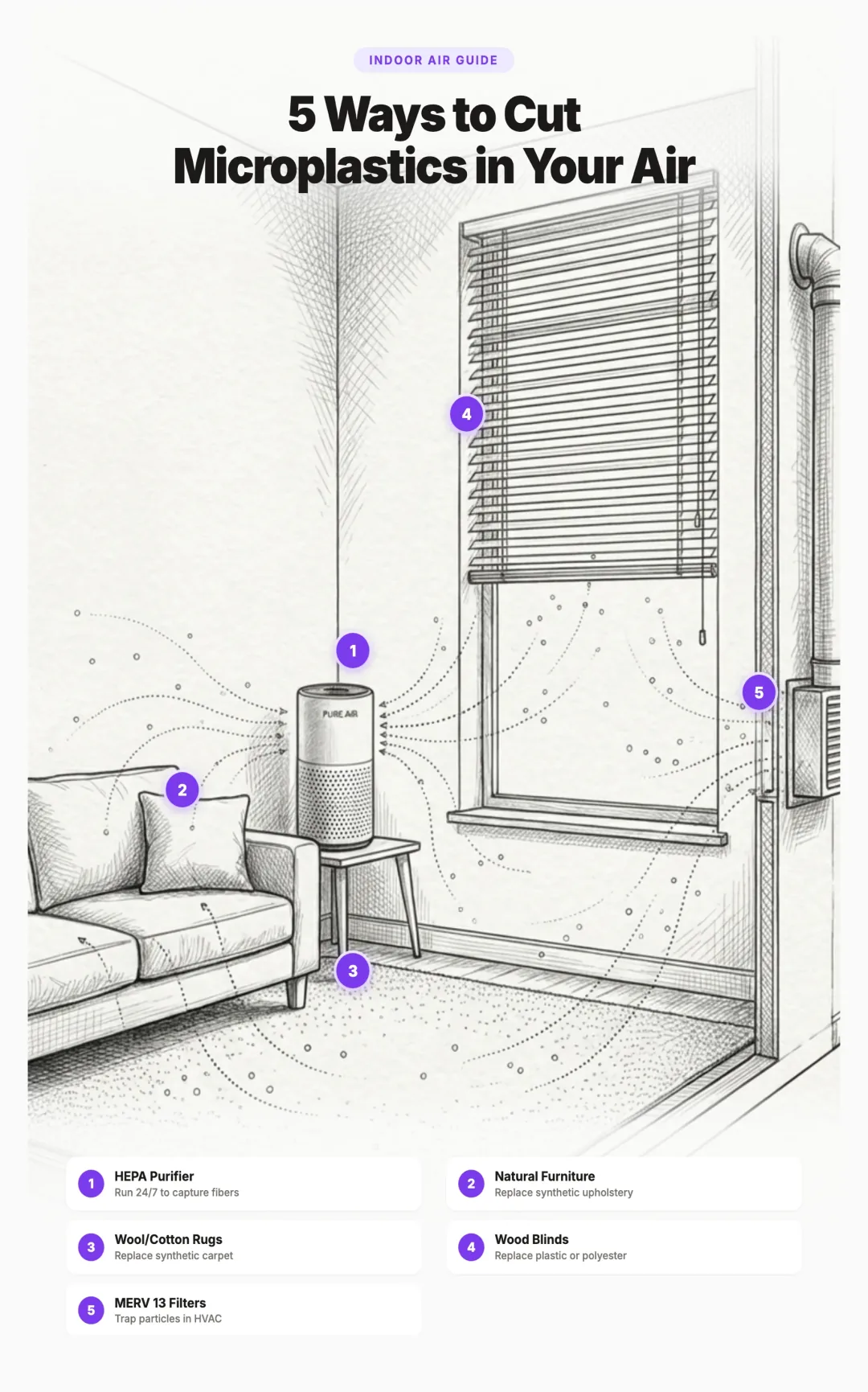
- A True HEPA purifier in your bedroom is the single best swap. The Coway Mighty captures 99.97% of particles down to 0.3 microns, or step up to the Coway Airmega 400 for a quieter, better looking unit.
- Upgrade your HVAC filter to MERV 13. A standard MERV 8 misses most fibers, while a MERV 13 filter captures airborne microplastics across the whole house.
- Vacuum weekly with a sealed HEPA vacuum. Models like the Miele Guard L1 trap fibers instead of recirculating them.
- Swap bedding for natural fibers first. You spend a third of your life with your face on it, so organic cotton sheets and a wool or buckwheat pillow are high impact starting points.
You probably think about microplastics in your water and food. But the air inside your home may be the most significant route of exposure. Studies consistently find that indoor air contains far more microplastic particles than outdoor air, sometimes by a factor of 100 or more. Every breath you take indoors pulls microscopic plastic fibers and fragments into your lungs.
A 2022 study in Science of the Total Environment estimated that adults inhale approximately 16.2 bits of microplastic per hour. Over a year, that adds up to roughly 142,000 particles. And because most people spend 85% to 90% of their time indoors, your home, office, and car are the primary sites of inhalation exposure.
The good news: unlike water contamination or food packaging, indoor air microplastics are something you can significantly reduce with a few practical changes. This guide explains where airborne microplastics come from, which rooms and materials are the worst offenders, and what steps make the biggest difference.
1. Where Do Indoor Airborne Microplastics Come From?
Indoor microplastics are not coming from one single source. They accumulate from dozens of everyday materials that shed, degrade, and fragment over time. Understanding the main sources is the first step toward reducing exposure.
Synthetic textiles are the single largest contributor. Polyester, nylon, and acrylic fibers shed microscopic fragments constantly, not just during washing but also during normal wear, sitting on furniture, making the bed, and folding laundry. Every time you handle, wear, or walk past synthetic fabric, fibers break free and become airborne.
Synthetic carpeting and rugs are a close second. Most residential carpets are made from nylon, polyester, or polypropylene. Walking on carpet generates friction that breaks fibers loose. These fibers settle as dust and become airborne again with each footstep, making carpet a continuous source of resuspended microplastics.
Foam furniture and mattresses made from polyurethane foam degrade over time, releasing microplastic particles into household dust. Older foam products degrade faster as the material oxidizes and becomes brittle. This includes couch cushions, mattresses, pillows, and carpet padding.
Plastic household items also contribute. Anything made of hard or soft plastic, from storage bins to kitchen utensils to children's toys, can shed micro and nanoscale particles through abrasion, UV exposure from sunlight, and general wear.
Tumble dryers vent large quantities of synthetic fibers into indoor and outdoor air. A single dryer cycle can release up to 120 million microfibers. If your dryer vents indoors (common in apartments with condenser dryers), this becomes a major source.
Data synthesized from Dris et al. (2017), Vianello et al. (2019), Zhang et al. (2020), and Jenner et al. (2022). Proportions are approximate and vary significantly based on home furnishings, flooring type, and ventilation.
2. Which Rooms Have the Most Microplastics?
Not all rooms in your home are equal when it comes to airborne microplastics. Research shows significant variation depending on flooring type, textile density, and how much activity happens in each room.
Bedrooms tend to have the highest concentrations. This makes sense when you consider the amount of synthetic material in a typical bedroom: polyester bedding, synthetic pillows, polyurethane foam mattresses, nylon carpet, and polyester curtains. Tossing and turning during sleep creates constant fiber shedding from bedding. Making the bed each morning sends a plume of fibers into the air. You spend about 8 hours per night breathing this air at close range to your pillow and sheets.
Living rooms are typically the second highest because of upholstered furniture, carpeting, and the constant resuspension of settled dust from foot traffic and sitting.
Laundry rooms can have very high concentrations, especially during dryer operation. The lint visible in your dryer filter represents only a fraction of the fibers being shed. Smaller particles pass through the filter and become airborne.
Kitchens and bathrooms with hard flooring and fewer textiles generally have lower concentrations, though plastic cutting boards, synthetic sponges, and plastic containers still contribute.
3. Health Effects of Inhaling Microplastics
The health effects of inhaling microplastic particles are an active area of research. While long term human studies are still underway, the early findings are concerning enough to justify precautionary action.
Lung tissue accumulation. A landmark 2022 study published in Science of the Total Environment by Jenner et al. found microplastics in 11 of 13 human lung tissue samples. The most common types were polypropylene (used in packaging) and PET (used in clothing and bottles). This confirmed that inhaled microplastics can lodge in lung tissue and persist there.
Inflammatory response. Laboratory studies on human lung cells show that exposure to microplastic particles triggers inflammatory responses, including the release of cytokines and oxidative stress markers. Chronic low level inflammation is linked to respiratory disease, cardiovascular problems, and immune dysfunction.
Fiber length matters. Longer fibers (over 10 microns) are more difficult for the lungs to clear and are more likely to cause irritation. This is significant because synthetic textile fibers tend to be long and thin, a shape that allows them to travel deep into the lower airways.
Chemical carriers. Microplastics are not just inert particles. They carry chemical additives from manufacturing, including plasticizers, flame retardants, and UV stabilizers. They also adsorb pollutants from the surrounding environment. When inhaled, these chemicals can leach from the plastic surface into lung tissue.
Occupational evidence. Workers in the textile and flock industries who are exposed to high levels of synthetic fibers show elevated rates of respiratory symptoms, reduced lung function, and interstitial lung disease. While home exposure is at lower levels, it is continuous and lifelong.
4. HEPA Air Purifiers: Your Best Defense
A HEPA (High Efficiency Particulate Air) air purifier is the single most effective tool for reducing airborne microplastics in your home. True HEPA filters capture 99.97% of particles that are 0.3 microns and larger. Since most airborne microplastic particles range from 1 to 5,000 microns, a HEPA filter captures them with near perfect efficiency.
What to Look For
True HEPA certification. Avoid products labeled "HEPA type" or "HEPA like." Only filters meeting the H13 or H14 standard capture 99.97% or more of particles at the 0.3 micron threshold. This distinction matters because lower grade filters allow a significant percentage of fine particles to pass through.
Room size rating (CADR). The Clean Air Delivery Rate tells you how much air the purifier can filter per minute. Choose a purifier with a CADR rating that matches or exceeds your room size. Undersized purifiers cannot cycle the room's air frequently enough to make a meaningful difference.
Sealed system design. The filter alone is not enough. Air must be forced through the filter, not around it. Look for purifiers with sealed housings that prevent unfiltered air from bypassing the filter element. Many budget models have gaps around the filter that allow untreated air to recirculate.
Noise level. Since the purifier should run continuously, especially in bedrooms, noise matters. Look for models rated below 30 dB on their lowest setting. If the purifier is too loud to sleep with, you will turn it off at night, which defeats the purpose.
Recommended Placement
Start with your bedroom. You spend roughly one third of your life there, and bedroom air typically has the highest microplastic concentration. Place the purifier within a few feet of your bed, ideally on the side where you sleep. If you can afford a second unit, place it in the living room or the room where you spend the most waking hours.
| Feature | Why It Matters | What to Look For |
|---|---|---|
| Filter grade | Determines particle capture rate | |
| CADR | Must match your room size | |
| Sealed system | Prevents air bypass around filter | |
| Noise (sleep mode) | Must be quiet enough to run all night | |
| Filter cost | Ongoing expense every 6 to 12 months |
Recommended HEPA Air Purifiers
This is the short list. For the full guide, including steel body units, a room size matching table, and the ozone based purifiers to avoid, see our best air purifiers for microplastics.
| Product | Room Size | Key Features | Rating |
|---|---|---|---|
| Coway Airmega AP-1512HH | Up to 361 sq ft | True HEPA, 24.7 dB on low, auto mode, affordable filters | |
| Austin Air it | Bedroom or office | All steel housing, HEPA to 0.1 microns plus carbon, purely mechanical with no ionizer. No published CADR | |
| Coway Airmega 400 | Up to 1,560 sq ft | Dual HEPA filters, great for large living rooms and open plans |
5. Flooring and Carpets
Your choice of flooring has a dramatic effect on indoor microplastic levels. Synthetic carpets are both a source and a reservoir of microplastics. They shed their own fibers continuously and trap microplastic dust from other sources, which then becomes airborne again with every footstep.
A 2019 study by Vianello et al. found that homes with synthetic carpet had microplastic concentrations in settled dust that were 2x to 10x higher than homes with hard flooring. The simple act of walking across a carpeted room resuspends settled microplastic particles back into the breathing zone.
Best Flooring Options for Reducing Microplastics
| Flooring Type | Microplastic Shedding | Dust Trapping | Rating |
|---|---|---|---|
| Solid hardwood | None | Easy to clean, no trapping | |
| Natural stone or tile | None | Easy to clean, no trapping | |
| Bamboo | None | Easy to clean, no trapping | |
| Natural linoleum | None (made from linseed oil) | Easy to clean | |
| Cork | None | Easy to clean, warm underfoot | |
| Wool carpet | Natural fibers (biodegradable) | Traps dust but fibers are natural | |
| Vinyl / LVP | Low shedding, but is PVC based | Easy to clean | |
| Nylon carpet | Continuous microplastic shedding | Traps and resuspends microplastic dust | |
| Polyester carpet | High microplastic shedding | Traps and resuspends microplastic dust |
If replacing carpet is not an option right now, there are steps that help reduce the problem. Vacuum frequently with a HEPA equipped vacuum (see Section 7). Place washable natural fiber rugs over synthetic carpet in high traffic areas. And prioritize the bedroom: even just replacing the bedroom carpet with hard flooring makes a significant difference because of the time you spend there.
6. Textiles, Bedding, and Furniture
Synthetic textiles throughout your home continuously shed microplastic fibers into the air. Every time you handle clothing, sit on a polyester couch, pull synthetic blankets over yourself, or fluff a polyester filled pillow, fibers are released. Here is where to focus your swaps.
Bedding (Highest Priority)
Because your face is pressed into your bedding for 7 to 9 hours each night, this is the most impactful swap you can make. Replace polyester sheets, pillowcases, and duvet covers with 100% organic cotton, linen, or TENCEL (lyocell). TENCEL is not a synthetic plastic. It is a manufactured fiber made from sustainably harvested wood pulp using a closed loop process. It is biodegradable and does not shed microplastics, making it an excellent alternative to polyester. Replace polyester filled pillows with wool, kapok, buckwheat, or natural latex pillows. If you have a polyurethane foam mattress, encase it in a tightly woven natural fiber mattress protector to reduce fiber and particle release.
Organic Cotton Bedding
100% organic cotton sheets and pillowcases are the most accessible swap. They are widely available, affordable, and effective at eliminating one of your biggest sources of nighttime microplastic exposure. Look for GOTS (Global Organic Textile Standard) certified options, which guarantee the cotton is organic and processed without harmful chemicals.
Why we recommend it: Eliminates synthetic fiber shedding during sleep, breathable, widely available, and machine washable.
Wool Pillows
Wool filled pillows are naturally hypoallergenic, temperature regulating, and resistant to dust mites. Unlike polyester fill, wool fibers are biodegradable and do not contribute to microplastic pollution. They maintain their loft well and last significantly longer than synthetic alternatives.
Why we recommend it: Zero microplastic shedding, natural temperature regulation, dust mite resistant, and long lasting.
Our Top 3 Organic Sheet Sets
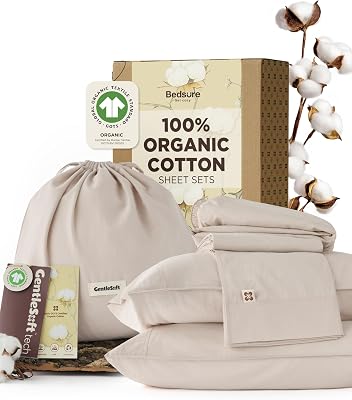
Bedsure Organic Cotton
100% GOTS certified organic cotton, percale weave, 17 inch deep pocket, machine washable.
View →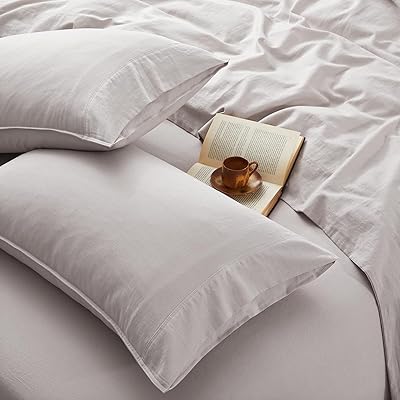
French Linen Sheet Set
100% flax linen from Normandy, four piece set, breathable and moisture wicking, softens with every wash.
View →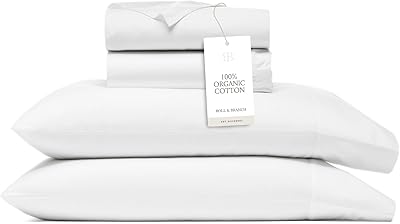
Boll & Branch Signature
100% organic cotton, GOTS and Fair Trade certified, 300 thread count sateen, made without synthetic finishes.
View →Bedding Comparison
| Product | Material | Key Features | Rating |
|---|---|---|---|
| Boll & Branch Signature Sheets | 100% organic cotton | GOTS certified, Fair Trade, 300 thread count percale | |
| Coyuchi Organic Crinkled Percale Sheets | 100% organic cotton | GOTS certified, relaxed texture, durable | |
| 100% Linen Sheet Set | Linen (flax) | Temperature regulating, gets softer over time, extremely durable | |
| Holy Lamb Organics Wool Pillow | Wool fill, organic cotton cover | Adjustable loft, hypoallergenic, made in USA | |
| Buckwheat Hull Pillow | Buckwheat hulls, cotton cover | Fully adjustable, excellent support, zero synthetic materials | |
| Organic Cotton Mattress Protector | Organic cotton | Encases foam mattresses to reduce particle release |
Upholstered Furniture
Sofas, armchairs, and cushions upholstered in polyester fabric shed fibers every time someone sits down. The friction from sitting, shifting, and standing creates a constant stream of microplastic particles. When shopping for furniture, look for upholstery in natural materials: cotton, linen, hemp, or leather. If replacing furniture is not practical, covering synthetic sofas with washable natural fiber throws or slipcovers reduces direct fiber shedding into the air.
Curtains and Drapes
Polyester curtains shed fibers, especially when they move in a breeze or when you open and close them. Cotton, linen, or hemp curtains are a simple swap. If you have existing synthetic curtains, washing them (in a Guppyfriend bag) before hanging and minimizing handling reduces shedding.
Estimates are approximate and based on the relative contribution of each source. Actual reductions depend on room size, existing materials, and purifier efficiency. Reductions are not strictly additive because eliminating one source shifts the relative contribution of others.
7. Cleaning Strategies That Actually Help
How you clean your home can either reduce or increase the amount of microplastics in your air. The right approach makes a significant difference. The wrong approach can make things worse.
Vacuuming
Use a sealed HEPA vacuum. This is essential. Standard vacuums capture larger particles but blow fine microplastic particles back into the air through their exhaust. A sealed HEPA vacuum traps particles down to 0.3 microns, keeping them contained. We compare the models worth buying, and explain why the seal matters more than the filter, in our full vacuum cleaners for microplastics guide.
Vacuum frequently. Microplastic containing dust accumulates quickly, especially on carpet and upholstered surfaces. Vacuuming high traffic areas twice per week and bedrooms at least once per week keeps settled dust from building up and resuspending into the air.
Vacuum slowly. Moving the vacuum slowly over each section gives the suction more time to pull particles out of carpet fibers. Fast, rushed vacuuming leaves behind a large percentage of settled dust and can even stir it into the air without capturing it.
Wet Cleaning
Damp mop hard floors. Dry sweeping and dry mopping push fine particles into the air rather than capturing them. A damp mop picks up settled microplastic dust without resuspending it. Microfiber mops are effective at capturing fine particles, but note that they are themselves made of synthetic material and will eventually shed. Cotton mop heads are a better long term choice.
Damp dust surfaces. Use a damp cloth rather than a dry duster or feather duster on shelves, windowsills, and furniture. Dry dusting sends settled particles back into the air. A damp cloth traps them.
What to Avoid
Dry sweeping on hard floors pushes dust and microplastic particles into the air.
Compressed air dusters blast settled particles into the breathing zone.
Non HEPA vacuums can increase airborne microplastics by exhausting fine particles.
Recommended HEPA Vacuums
| Product | Type | Key Features | Rating |
|---|---|---|---|
| Shark Navigator NV356E | Upright | Sealed system with HEPA filter included, detachable canister, budget friendly | |
| Miele Guard L1 AllFloor | Canister | Sealed AirClean system, self sealing bags, extremely quiet. Successor to the discontinued Complete C3. Add the SF-HA 50 filter for certified HEPA 13. | |
| Dyson Gen5detect | Cordless stick | Whole machine HEPA filtration as standard, laser dust detection. Note: the V8, V10, V12 and retail V15 do not carry the whole machine HEPA claim. Premium priced. | |
| Miele Classic C1 | Canister | Sealed system, compact, affordable entry to Miele quality. Takes the SF-HA 30 HEPA filter. |
Cotton Mop
For damp mopping hard floors, a cotton string mop or cotton pad mop avoids the microplastic shedding issue of synthetic microfiber mops. Cotton captures dust effectively when damp and can be machine washed hundreds of times.
Why we recommend it: No synthetic fiber shedding, effective dust capture, reusable, and machine washable.
Guppyfriend Washing Bag
The Guppyfriend is a specially designed mesh bag that captures microfibers shed by synthetic clothing during machine washing. Place your polyester, nylon, and acrylic garments inside before washing. In a 2020 University of Plymouth study it cut the microfibers reaching wastewater by about 54%, mostly by reducing shedding, and the maker's own commissioned tests at Fraunhofer UMSICHT report 79 to 86% less fiber breakage. After washing, simply remove the collected fibers from the bag and dispose of them in the trash.
Why we recommend it: Reduces microfiber release at the source, protects both your home air quality and waterways, reusable for hundreds of washes.
- Get a HEPA vacuum if you do not already have one. This is the foundation.
- Vacuum carpeted areas and upholstered furniture twice per week.
- Damp mop hard floors once or twice per week.
- Damp dust surfaces weekly.
- Wash bedding weekly in hot water to remove accumulated fibers.
8. Ventilation and Airflow
Ventilation plays a complex role in indoor microplastic exposure. Opening windows brings in outdoor air, which generally has far fewer microplastics than indoor air. But it also depends on where you live and what is outside your window.
Opening windows helps in most cases. Outdoor air typically contains 1 to 100 microplastic particles per cubic meter, compared to 1,000 to 60,000 indoors. Opening windows dilutes indoor concentrations with cleaner outdoor air. If you live in a residential area away from heavy industry, regular ventilation is beneficial.
Cross ventilation is most effective. Opening windows on opposite sides of a room or home creates airflow that pushes contaminated indoor air out while pulling fresher outdoor air in. Even 15 to 20 minutes of cross ventilation per day makes a measurable difference.
Be cautious near busy roads. Homes near highways or heavy traffic areas may have higher outdoor microplastic levels from tire wear particles and road dust. In these cases, a HEPA air purifier with windows closed may be more effective than ventilation alone.
Check your HVAC filters. If your home uses central heating or air conditioning, upgrade the HVAC filter to MERV 13 or higher. Standard HVAC filters (MERV 8 and below) do not capture most microplastic particles. A MERV 13 filter captures approximately 85% of particles between 1 and 3 microns. Replace these filters on schedule, typically every 3 months, to maintain effectiveness.
MERV 13 HVAC Filters
Upgrading your furnace or AC filter from the standard MERV 8 to a MERV 13 captures approximately 85% of particles between 1 and 3 microns. This is one of the most cost effective upgrades you can make because your HVAC system filters all the air in your home multiple times per day. Check that your system can handle the increased airflow resistance before upgrading, as some older systems may struggle with high MERV filters.
Why we recommend it: Filters your entire home's air passively, costs $15 to $30 per filter, replaced every 3 months.
9. Room by Room Action Plan
Here is a prioritized list of actions organized by room. Start with the bedroom (where you have the highest exposure over the longest time period), then work outward.
- Replace polyester sheets and pillowcases with 100% organic cotton, linen, or TENCEL (a manufactured fiber from wood pulp, not a synthetic, but much better than polyester)
- Replace polyester filled pillows with wool, kapok, or natural latex
- Add a true HEPA air purifier and run it continuously
- If possible, replace synthetic carpet with hard flooring
- Encase foam mattresses in a tightly woven natural fiber protector
- Wash bedding weekly in hot water
- Cover synthetic upholstered furniture with natural fiber throws or slipcovers
- Replace synthetic throw blankets and cushion covers with cotton, wool, or linen
- Vacuum upholstered furniture weekly with a HEPA vacuum
- Consider a second HEPA purifier for this room
- Replace synthetic curtains with cotton or linen options
- Upgrade HVAC filter to MERV 13 or higher
- Switch to a HEPA filter vacuum cleaner
- Damp mop hard floors instead of dry sweeping
- Open windows for 15 to 20 minutes daily when weather permits
- Air dry synthetic clothes whenever possible. A single dryer cycle can release up to 120 million microfibers. If you must use a dryer, use a dryer filter bag or secondary vent filter to capture fibers before they enter your air
- Use a Guppyfriend washing bag for synthetic garments to capture microfibers during the wash cycle
- Replace synthetic rugs with wool, cotton, or jute alternatives
- Reduce the number of plastic items stored in the open (bins, organizers, decor)
- Choose natural fiber clothing to reduce fibers shed while wearing and handling
- Avoid synthetic air fresheners and scented sprays (they often contain plastic micro capsules)
- Keep shoes at the door to reduce tracking in microplastic laden dust from outside
- Minimize soft plastic children's toys in bedrooms and play areas
Frequently Asked Questions
How many microplastics are in indoor air?
Studies have found between 1,000 and 60,000 microplastic particles per cubic meter of indoor air, depending on the room, flooring type, ventilation, and number of synthetic textiles present. Indoor concentrations are consistently higher than outdoor air, often by a factor of 2x to 100x.
Do HEPA air purifiers remove microplastics from the air?
Yes. True HEPA filters capture 99.97% of particles 0.3 microns and larger. Since most airborne microplastic particles and fibers are between 1 and 5,000 microns, a HEPA air purifier is highly effective at removing them from indoor air. For best results, choose a purifier rated for your room size and run it continuously.
What is the biggest source of microplastics in indoor air?
Synthetic textiles are the largest source of airborne microplastics indoors. Polyester, nylon, and acrylic clothing, bedding, upholstery, and carpets continuously shed microscopic fibers into the air through normal wear, movement, and friction. Dust resuspension from walking on synthetic carpets is another major contributor.
Can you breathe in microplastics?
Yes. Humans inhale microplastic particles with every breath. A 2022 study published in Science of the Total Environment estimated that adults inhale approximately 16.2 bits of microplastic per hour, which amounts to roughly 142,000 particles per year. Microplastic fibers have been found in human lung tissue, confirming that inhaled particles can accumulate in the respiratory system.
Does vacuuming reduce microplastics in the air?
Vacuuming with a HEPA filter equipped vacuum cleaner reduces microplastic containing dust on floors and surfaces. However, vacuums without HEPA filters can actually increase airborne microplastics by blowing fine particles back into the air through their exhaust. Always use a vacuum with a sealed HEPA filtration system for best results.
Is outdoor air better than indoor air for microplastics?
In most locations, yes. Outdoor air typically contains 1 to 100 microplastic particles per cubic meter, while indoor air can contain 1,000 to 60,000 particles. Opening windows to ventilate your home dilutes the higher indoor concentrations with cleaner outdoor air. The exception is homes very close to highways or industrial areas, where outdoor microplastic levels may be elevated from tire wear and industrial emissions.
Should I replace all my carpet to reduce microplastic exposure?
Replacing all carpet is ideal but not necessary to see significant improvements. Prioritize the bedroom first, as that is where you have the longest continuous exposure. If full replacement is not feasible, frequent HEPA vacuuming, placing natural fiber rugs over synthetic carpet, and running a HEPA air purifier all help reduce exposure meaningfully.
Do air fresheners contain microplastics?
Many spray air fresheners and plug in scent diffusers use synthetic fragrance micro capsules made from melamine formaldehyde or other plastic polymers. These microscopic capsules are designed to slowly release scent, but in the process they release plastic particles into your indoor air. Natural alternatives like essential oil diffusers, beeswax candles, or simply opening a window provide fragrance without adding plastic to your air.
Related Articles
- Best Vacuum Cleaners for Microplastics
Why the seal matters more than the filter, the Dyson question, and the models that actually capture plastic dust. - Microplastics in Clothing and Laundry: How to Reduce Fiber Shedding
Your synthetic clothes are the biggest source of indoor microplastic fibers. Learn how to reduce shedding. - Microplastics in Cosmetics and Personal Care Products
Identify and eliminate hidden microplastics in your skincare, toothpaste, and beauty products. - How to Start Reducing Plastic Exposure
A practical priority guide for reducing plastic in your daily routine.