Your Bamboo Toothbrush Probably Still Has Plastic Bristles (2026)
The 30 Second Summary
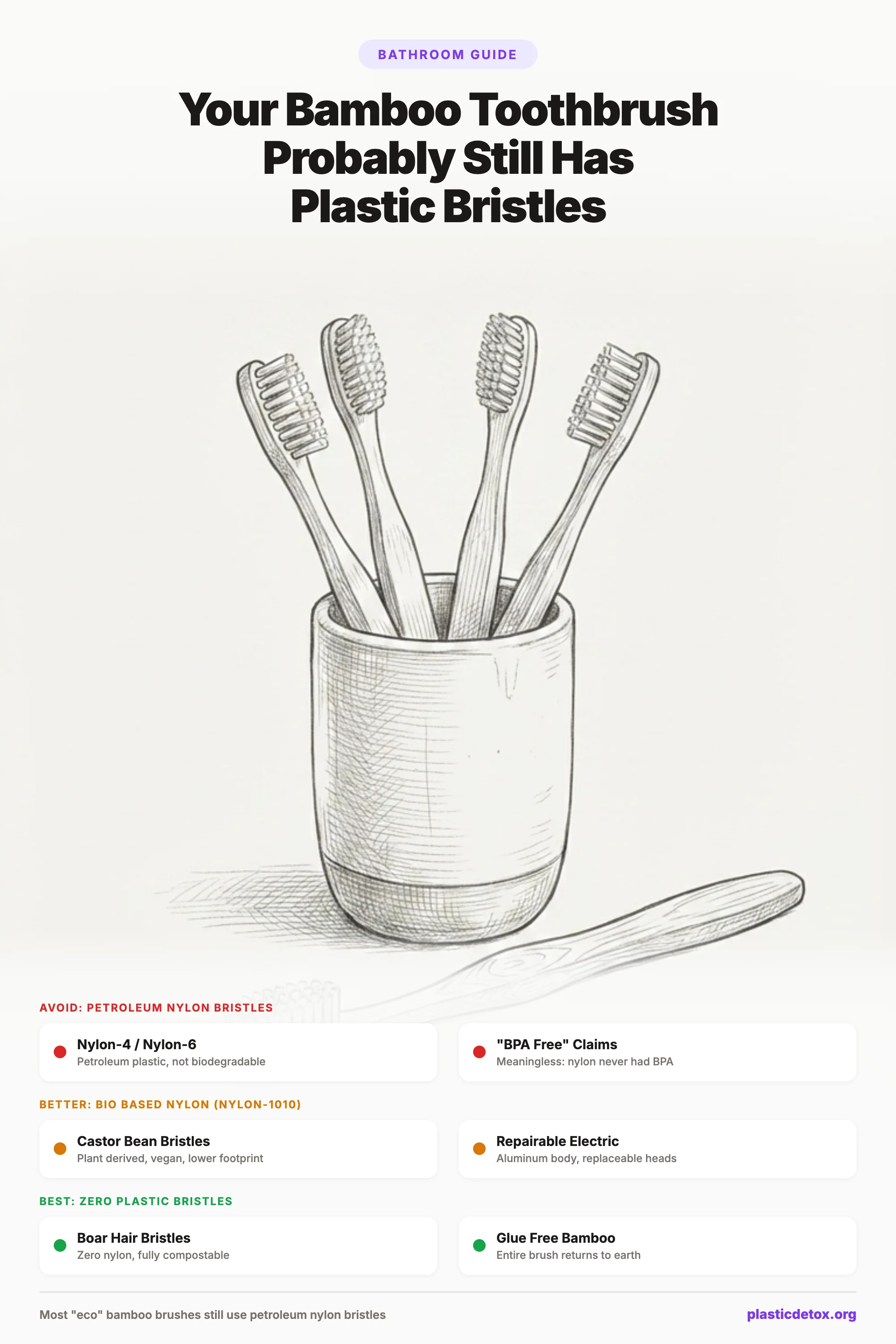
- The bamboo handle is honest, the bristles usually are not. Almost every bamboo toothbrush on the market uses nylon bristles, which are still plastic.
- "Plant based" bristles are not plastic free. Castor bean nylon (often labeled bio nylon) is still a synthetic polymer that sheds microplastics during brushing.
- Only animal hair bristles are truly plastic free. Boar bristle is the only commercially available bristle material that is fully biodegradable.
- Best zero plastic pick: Gaia Guy Boar Bristle Bamboo Toothbrush. Bamboo handle, real boar bristles, metal staples, no nylon, fully compostable, and the best reviewed boar brush we found. PRIMALS is the glue free runner up.
- Best vegan compromise: SeaTurtle. Castor bean bristles cut petroleum content but still shed some microplastic. Honest middle ground.
- Best electric: SURI 2.0. Repairable, recyclable, plant based bristles, brand offers a free take back program for old heads.
You made the switch. You ditched the plastic toothbrush, bought a bamboo one, and felt good about it. The handle is biodegradable. The packaging is cardboard. It looks great on your bathroom shelf.
But those bristles? Almost certainly still plastic.
The vast majority of bamboo toothbrushes on the market use nylon bristles, a synthetic polymer derived from either petroleum or castor bean oil. The handle might be compostable, but the part that actually goes in your mouth is still made from the same material family as your old plastic brush. And when you "compost" that bamboo toothbrush, those nylon bristles end up in a landfill anyway.
This is not a scam, exactly. It is more like a half truth that the industry is comfortable with. And to make a genuinely informed choice, you need to understand the full picture: what your bristles are actually made of, where the materials come from, and which brands are doing things differently.
1. The Bristle Problem Nobody Talks About
Pick up any bamboo toothbrush on Amazon and read the description carefully. You will see phrases like "BPA free bristles," "plant based bristles," or "eco friendly bristles." What you will rarely see is a clear, honest answer about what the bristles are made of.
Here is the reality: no company has successfully mass produced a fully biodegradable toothbrush bristle. Every option currently on the market involves some form of trade off.
The term "BPA free" tells you nothing about whether a product is plastic free. BPA (bisphenol A) is a specific chemical additive. Nylon bristles typically do not contain BPA regardless, so labeling them "BPA free" is technically true but deliberately misleading. It is like labeling water "gluten free."
2. Bristle Materials Explained
There are only four bristle materials used in toothbrushes today. Understanding the differences is the key to making a real choice.
Nylon-4 and Nylon-6: The Industry Standard
This is what most bamboo toothbrush brands use, including the majority of the $5 to $10 packs you find on Amazon. These are petroleum derived synthetic polymers. They do not biodegrade in any meaningful timeframe. They will outlast the bamboo handle by decades.
Some brands claim Nylon-4 bristles are "biodegradable." This traces back to a single 1998 lab study by Yamano et al. showing Nylon-4 degradation under very specific conditions with specific soil bacteria. This has never been replicated in real world composting environments. Do not fall for this claim.
Nylon-1010: The "Bio Based" Middle Ground
Nylon-1010 is made from sebacic acid, which is derived from castor bean oil. It is a renewable feedstock, which is genuinely better than petroleum. The carbon footprint of production is lower, and the raw material is a crop rather than a fossil fuel.
But Nylon-1010 is still chemically polymerized into a synthetic nylon. It does not biodegrade in your backyard compost. It may break down in industrial composting facilities at high temperatures over extended periods, but access to industrial composting varies wildly by region, and most facilities do not accept these bristles.
Boar Hair: The Only Truly Plastic Free Option
Boar hair bristles are the only bristle material currently available that contains zero synthetic polymer. They are natural animal hair, typically sourced as a byproduct of the pork industry in China. They are fully biodegradable and home compostable.
The downsides are real: they are not vegan, they can shed earlier than nylon (especially in glue free designs), and they feel softer than what most people are used to. Worth knowing before you buy: boar bristles also soften quickly with use, going noticeably plusher after the first couple of weeks. If you like a firm or hard bristle brush, this is probably not the switch for you. But if your goal is zero plastic in your mouth, this is currently the only option.
Castor Bean Bristles: The Vegan Compromise
Brands like SeaTurtle use bristles derived from castor bean plants but processed into Nylon-1010. They are marketed as "plant based" and are the most common vegan alternative to boar hair. They are softer than conventional nylon and have a lower environmental impact than petroleum nylon.
But they are still a nylon polymer. If your priority is zero nylon in your mouth, castor bean bristles do not achieve that. If your priority is avoiding animal products while minimizing petroleum use, they are a solid choice.
3. Where Bamboo Toothbrushes Actually Come From
Understanding the supply chain helps you separate genuinely responsible brands from ones that just slap a green label on a generic product.
The Bamboo
Nearly all bamboo toothbrushes use Moso bamboo (Phyllostachys edulis), grown primarily in China's Fujian and Zhejiang provinces. Moso bamboo grows up to a meter per day, does not require pesticides or fertilizers, and regenerates from its root system after harvesting. It is a genuinely sustainable raw material.
However, "sustainably sourced bamboo" is an unregulated claim. The meaningful certification to look for is FSC (Forest Stewardship Council), which verifies responsible forest management. Most budget bamboo toothbrush brands do not have FSC certification.
The Manufacturing
The vast majority of bamboo toothbrushes are manufactured in China, regardless of where the brand is based. This includes many "designed in California" or "designed in Australia" brands. Chinese manufacturing is not inherently bad, but it does mean:
- Longer shipping distances and higher transport emissions
- Less visibility into labor conditions and environmental practices
- Brands that are transparent about their factories are worth more trust
The Bristle Supply Chain
Boar hair bristles are primarily sourced from Anhui and Jiangsu provinces in China, where they are collected as a byproduct of pork processing. The hair is sorted, cleaned, sanitized, and cut to size. Brands that publish details about their sourcing and manufacturing process offer more transparency than brands that use generic contract manufacturers. Look for specific material certifications and named supply chain details on the brand's website before buying.
Nylon bristles, both petroleum and castor bean derived, are produced by chemical companies like DuPont, BASF, and Arkema. The castor beans for Nylon-1010 are grown primarily in India and processed into sebacic acid before being polymerized into nylon filament.
4. Greenwashing Red Flags
The bamboo toothbrush market is full of misleading claims. Here are the most common ones to watch for.
This does not mean bamboo toothbrushes are a bad choice. A bamboo handle with nylon bristles is still significantly less plastic than a fully plastic toothbrush. The handle accounts for roughly 90% of the total material weight. But "less plastic" is not the same as "plastic free," and brands should be honest about that.
5. The Best Truly Low Plastic Toothbrushes
We evaluated dozens of bamboo toothbrush brands for bristle transparency, material quality, certifications, and owner reviews. Four brushes made it, one for each priority. The safety screen is the gate and owner ratings decide the order among the brushes that pass it, which is why Gaia Guy leads: the two boar bristle brushes are the only zero plastic options, SeaTurtle is the vegan trade off with nylon bristles, and SURI is the electric pick covered in the next section.
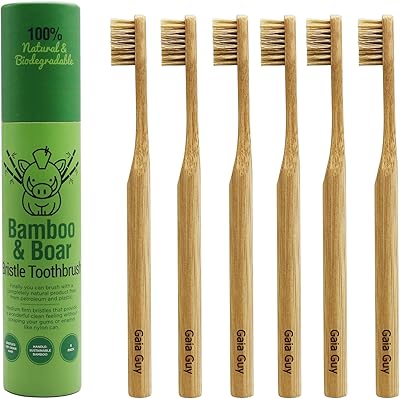
Gaia Guy Boar Bristle Bamboo Toothbrush
Boar hair bristles, raw bamboo handle with no coating, metal staples, no glue. Nothing plastic in the brush or the compostable packaging. Not vegan, and a few loose bristles in the first week are normal.
View →
PRIMALS Boar Bristle Bamboo Toothbrush
Boar hair bristles woven into a single piece bamboo handle, no glue, no nylon, no plastic anywhere. Stands on its own to dry fast. Not vegan, and early bristle shedding is common.
View →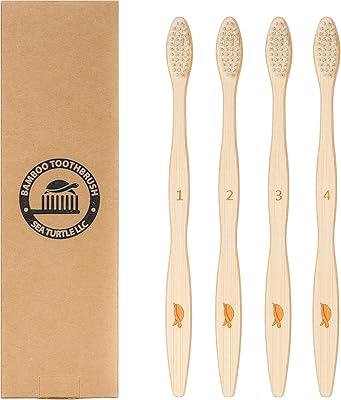
SeaTurtle Plant Based Bamboo Toothbrush
Castor bean bristles on a bamboo handle, USDA BioPreferred, vegan, the cheapest brush here. Careful: the bristles are Nylon-1010, a bio based nylon that is still a polymer and still sheds.
View →
SURI Sonic Electric Toothbrush
Aluminum handle built to be repaired, not replaced, with a free head take back program and B Corp certification. Castor oil Nylon-1010 bristles, like every electric head on the market.
View →Gaia Guy Boar Bristle Bamboo Toothbrush
The most established name in the boar bristle bamboo toothbrush space, and the best reviewed boar brush we found, which is what puts it first. Gaia Guy was one of the first brands to offer a 100% boar hair bristle brush and has built a loyal following in the non toxic and low waste community. Their bristles are fully compostable and biodegradable.
Bristles: 100% boar hair, no nylon, no petrochemicals
Price: ~$22 / 6 pack
Type: Manual
- 100% boar hair, no nylon, no petrochemicals
- Longer track record than PRIMALS
- Fully compostable and biodegradable
- 4.2 stars across 1,500+ ratings, the most of any boar brush
- Not vegan (boar hair)
- Softer than a nylon brush, by design
- Bristle shedding also reported
PRIMALS Boar Bristle Bamboo Toothbrush
One of the most non toxic toothbrush options available for adults. PRIMALS uses 100% boar hair bristles with zero nylon, zero plastic anywhere in the brush. The bristles are naturally antimicrobial and the free standing design allows the brush to dry between uses, which resists mold growth on the bamboo handle.
Bristles: 100% boar hair, zero nylon, zero synthetics
Price: ~$28 / 4 pack
Type: Manual
- Zero nylon, zero plastic anywhere in brush
- Fully biodegradable, no glue
- Free standing design dries fast, resists mold
- Compostable cardboard packaging, nothing plastic in the box
- Not vegan (boar hair)
- Early bristle shedding common (glue free design)
- Newer brand, and owner ratings sit below Gaia Guy at 3.9 stars
SeaTurtle Plant Based Bamboo Toothbrush
The best value vegan option. SeaTurtle uses castor bean bristles on a bamboo handle; the maker describes its bamboo as from well managed forests but we found no FSC certificate. While the bristles are technically Nylon-1010 (a bio based nylon), they are derived entirely from plant sources. The brand is a California based family company with good transparency about their materials and manufacturing.
Bristles: Castor bean (Nylon-1010, plant based)
Price: ~$10 / 4 pack
Type: Manual
- Vegan with plant based castor bean bristles
- USDA Bio-Preferred certified
- Affordable, near conventional toothbrush price
- California based family brand, good transparency
- Bristles are Nylon-1010, bio based but still a nylon polymer
- Bristles very soft, some find cleaning less effective
- No recycling program for heads
6. Best Electric Option: SURI 2.0
If you prefer an electric toothbrush and want to minimize plastic, the SURI 2.0 is the standout option. It takes a fundamentally different approach to the disposability problem that plagues conventional electric brushes.
SURI 2.0 Electric Toothbrush
An aluminum bodied electric toothbrush designed to be repaired rather than replaced. The handle is built to last years, with a 40+ day battery life and a repairable design philosophy. Replacement heads use castor oil bristles (no petroleum nylon), and SURI runs a free head recycling program, which is the only one of its kind in the electric toothbrush space. B Corp certified.
Bristles: Castor oil (Nylon-1010), no petroleum nylon
Body: Aluminum, repairable
Price: ~$82 to $109
Type: Electric
- Castor oil bristles, no petroleum nylon
- Repairable aluminum handle, lasts years
- B Corp certified, free head recycling program
- Clinically tested, 40+ day battery life
- Bristles are Nylon-1010, bio based but not zero nylon
- Expensive upfront (~$82+)
- Made in China (like virtually all electric toothbrushes)
- Electronic components still create some e-waste
7. Side by Side Comparison
| Brand | Bristle Material | Plastic Free? | Vegan? | Price |
|---|---|---|---|---|
| PRIMALS | Boar hair | Yes, 100% | No | ~$5/brush |
| Gaia Guy | Boar hair | Yes, 100% | No | ~$5/brush |
| SeaTurtle | Castor bean (Nylon-1010) | Bio based nylon | Yes | ~$2.50/brush |
| SURI 2.0 | Castor oil (Nylon-1010) | Bio based nylon | Yes | ~$82+ (handle) |
| Generic bamboo | Nylon-4 / Nylon-6 | No, petroleum nylon | Yes | ~$1/brush |
| Conventional plastic | Nylon-6 + plastic handle | No, 100% plastic | Yes | ~$1 to $4/brush |
8. How to Actually Dispose of a Bamboo Toothbrush
Even with a bamboo toothbrush, disposal is not as simple as tossing it in the compost. Here is the correct process:
Pro tip: Some people skip the disassembly and just toss the whole brush in the compost. This leaves nylon bristles and metal staples in your compost, which defeats the purpose. Take the two minutes to disassemble it properly, or choose a boar bristle brush where the entire head is compostable.
PRIMALS brushes are notable here because they use a glue free design, which means the entire brush (handle + bristles) is compostable with no disassembly needed. The boar hair bristles simply fall out as the brush degrades.
9. What About Kids?
Children's oral health is critical, and this is one area where we lean toward pragmatism over purity.
Boar bristle brushes tend to be softer than what most pediatric dentists recommend for children, and the bristle shedding risk is more concerning for young children who might swallow loose bristles. For kids under 6, we recommend sticking with a standard children's toothbrush (or a castor bean bristle bamboo brush like SeaTurtle if they have a children's size) and focusing your plastic reduction efforts on higher impact areas like food storage and water filtration.
For kids 6 and older, a SeaTurtle or similar castor bean bristle brush is a great option. The bristles are firmer than boar hair and the shedding risk is minimal.
10. The Bottom Line
The bamboo toothbrush market is better than the conventional toothbrush market, but it is not as clean as most people think. Here is how to think about it:
Boar bristle bamboo brush (Gaia Guy or PRIMALS)
Zero plastic, fully compostable, lowest environmental footprint. Not vegan. This is as close to "zero waste" as a toothbrush gets today.
Castor bean bristle bamboo brush (SeaTurtle)
Bio based nylon from renewable sources, vegan, affordable. Still technically a nylon polymer, but significantly better than petroleum nylon. Best vegan option available.
Repairable electric brush (SURI 2.0)
Aluminum body built to last years, bio based bristles, B Corp certified, free head recycling program. Higher upfront cost but lowest long term waste if you prefer electric.
Generic bamboo brush with nylon bristles
Still better than a fully plastic toothbrush. The bamboo handle eliminates ~90% of the plastic by weight. Just know that the bristles are petroleum nylon, not "eco friendly."
Do not let the perfect be the enemy of the good. Any bamboo toothbrush is less plastic than a conventional one. But if you want to go further, the options above show you exactly how.
FAQ
Are bamboo toothbrush bristles actually plastic?
Yes, in most cases. The vast majority of bamboo toothbrushes use nylon bristles, which are a plastic polymer. Nylon-4 is petroleum based, while Nylon-1010 is derived from castor beans and marketed as bio based, but it is still technically a nylon polymer and will not biodegrade in a home compost. Only boar hair bristles are truly plastic free.
What is Nylon-1010 and is it better than regular nylon?
Nylon-1010 is a bio based nylon made from castor bean oil rather than petroleum. It has a lower carbon footprint to produce and is derived from a renewable resource. However, it is still a synthetic polymer that does not biodegrade in home composting conditions. It is a step forward from petroleum nylon but not a fully plastic free solution.
Are boar bristle toothbrushes effective for cleaning teeth?
Yes. Boar bristles have been used for oral hygiene for centuries and are effective for cleaning teeth and massaging gums. They are naturally softer than nylon, which some users prefer and others find too gentle. Boar bristles can shed more than nylon, especially with glue free designs, but brands like PRIMALS and Gaia Guy have strong track records. They are not vegan, however.
Is boar hair actually hygienic for brushing teeth?
Yes. Boar hair has natural antimicrobial properties and has been used in oral care for centuries, long before nylon was invented. The key to hygiene with any toothbrush is drying it between uses. Boar bristles on bamboo handles are more porous than plastic, so standing the brush upright and allowing airflow is important. Brands like PRIMALS use a free standing design specifically to address this. As with any toothbrush, replace it every 3 months and do not share brushes between people.
Can I compost a bamboo toothbrush?
You can compost the bamboo handle, but not the bristles in most cases. Nylon bristles (both petroleum and castor bean derived) must be pulled out with pliers and sent to landfill. Only boar hair bristles are fully compostable. The metal staples holding bristles in place are also not compostable and should be removed.
Is an electric toothbrush better than a bamboo one for reducing plastic?
It depends on your priorities. A repairable electric toothbrush like the SURI 2.0 uses an aluminum body that lasts years and offers a head recycling program, but the bristles are still Nylon-1010 and the electronics create e-waste. A boar bristle bamboo brush like PRIMALS has zero plastic but requires manual brushing. Both approaches reduce plastic compared to conventional plastic toothbrushes.
How often should I replace a bamboo toothbrush?
Every 3 months, just like a conventional toothbrush. The ADA recommends replacing toothbrushes every 3 to 4 months or sooner if the bristles become frayed. Bamboo handles should be kept dry between uses to prevent mold, as bamboo is more porous than plastic.
Related Articles
- How to Start Reducing Plastic Exposure: A Practical Priority Guide (2026)
A step by step guide to reducing your microplastic exposure, prioritized by what matters most. - Microplastics in Cosmetics and Personal Care Products (2026)
How microplastics hide in everyday beauty and hygiene products, and how to avoid them. - How to Avoid BPA and Phthalates in Everyday Products (2026)
A room by room guide to eliminating endocrine disruptors from your home. - BPA Free Is Not Safe: Why BPA Replacements May Be Just as Harmful (2026)
BPA free labels are marketing, not safety guarantees. Learn what to look for instead.